 In recent weeks, the SEO community has been abuzz with discussions about leaked Google API documentation. While the internet loves a good "GOOGLE + LEAK" headline, much of the conversation has generated more confusion than clarity.
But see, the real opportunity isn't in deciphering leaked internal APIs but in leveraging the powerful, public content APIs already at your disposal. Many marketers miss significant SEO and conversion wins because they view APIs as overly technical or irrelevant to their goals.
This guide provides 10 concrete, actionable ways you can use simple content APIs today to streamline workflows, boost search rankings, and increase conversions. No speculation—just practical strategy.
Key Takeaways
Public content APIs offer more tangible SEO and conversion opportunities than trying to decipher leaked Google documents.
Automating on-page SEO with analysis APIs and implementing server-side conversion tracking can significantly improve rankings and has been shown to increase ROAS by over 50%.
Actionable first steps include adopting a headless CMS to accelerate content publishing and automatically generating structured data to enhance visibility with rich snippets.
1. Streamline Content Publishing with a Headless CMS API
Implementation Complexity: Low
Expected Business Outcomes: Faster content velocity, reduced engineering overhead, improved content "freshness" (a key ranking factor), and better team collaboration.
A headless CMS with a robust content API is the foundation for modern content operations. It decouples your content management backend from your frontend presentation layer, allowing marketing teams to publish and update content without developer intervention for every change.
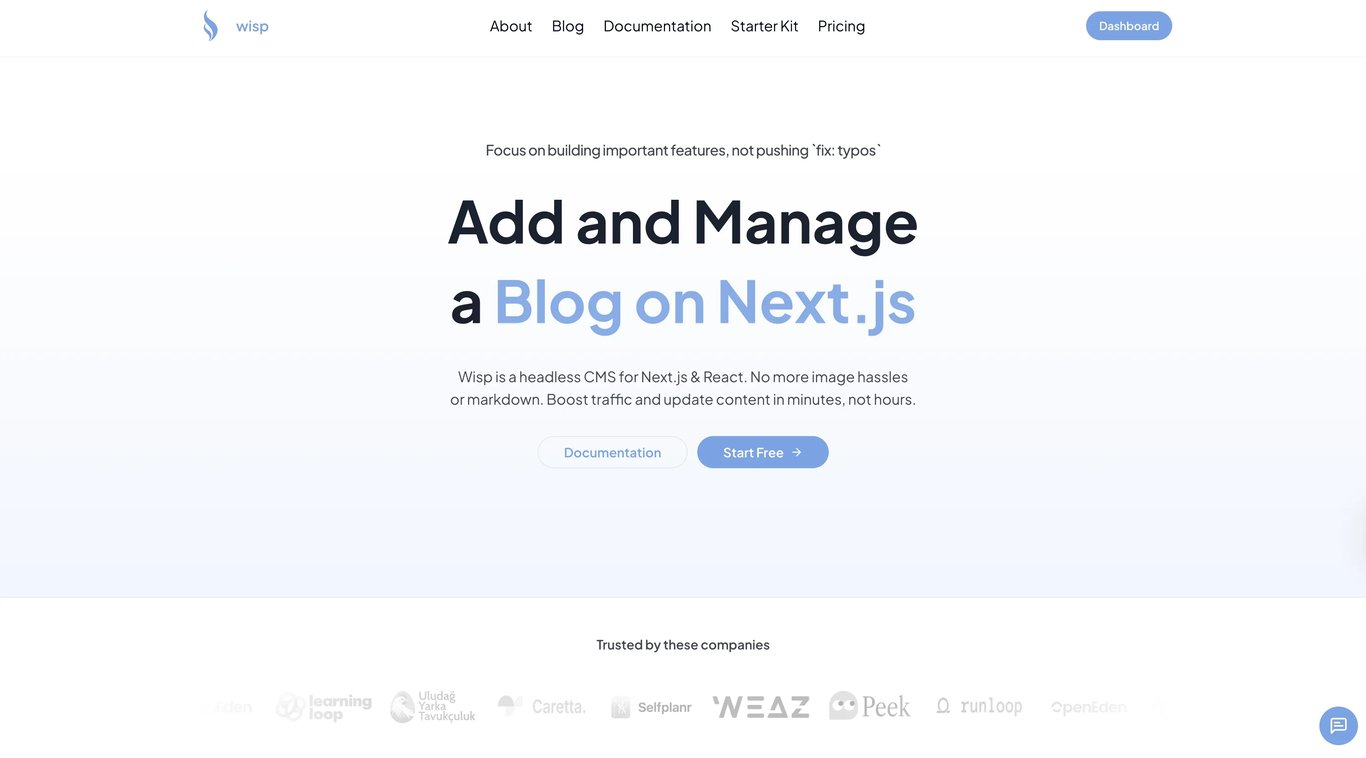
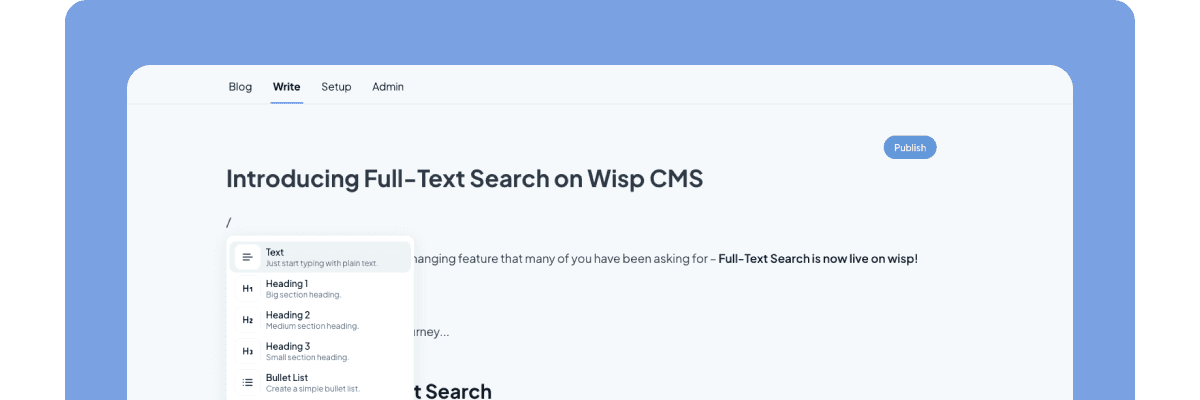
Wisp.blog exemplifies this approach, offering a headless CMS built specifically for adding high-performance blogs to Next.js and React sites. Its distraction-free editor lets non-developers publish content without knowing Markdown, while its Content API and SDK give developers the flexibility they need.
The workflow is straightforward: content creators write in Wisp's intuitive editor, developers grab their Blog ID and choose a setup method, and the content is fetched and rendered via the Content API.
Integration Considerations:
Use the Wisp Content API to fetch posts with simple endpoints
A basic API request might look like:
curl https://www.wisp.blog/api/v1/{blogId}/postsThe API supports key blog features out-of-the-box including post lists, single post fetching by slug, tags, and full-text search
Example endpoint for a single post:
GET /posts/{slug}Example for search:
GET /posts/?query={search_query}
By implementing this approach, you remove engineering bottlenecks from your content production process while ensuring your site stays fresh and relevant—a crucial factor for both SEO and user engagement.
2. Automate SEO Content Analysis and Optimization
Implementation Complexity: Medium
Expected Business Outcomes: Improved on-page SEO, higher rankings for target keywords, and increased content quality and relevance.
Content analysis APIs use natural language processing (NLP) and machine learning to provide data-driven recommendations for improving on-page SEO factors. Rather than manually checking each piece of content against best practices, these APIs can analyze thousands of pages simultaneously.
The Content Analysis API by seoClarity can evaluate content against top-ranking competitors, helping you create verifiably "helpful" content. This addresses technical scoring aspects like titlematchScore that Google uses to evaluate relevance.
Integration Considerations:
Integrate the API into your content development workflow or CMS
Build a custom dashboard that flags pages needing optimization based on API feedback
Set up automated alerts when content falls below certain quality thresholds
Use the insights to create content briefs for writers that include recommended topics, keywords, and structural elements
This API-driven approach ensures your content consistently follows SEO best practices without requiring constant manual review.
3. Scale Keyword and Topic Research
Implementation Complexity: Medium
Expected Business Outcomes: More comprehensive content strategy, increased organic traffic by targeting relevant long-tail keywords, and faster identification of new content opportunities.
Instead of manually researching keywords one by one, keyword research APIs allow you to get bulk topic insights, analyze competitor keyword strategies, and identify content gaps at scale.
Many enterprise SEO platforms offer keyword research APIs that you can integrate into your content planning workflow. These APIs can pull data on search volume, keyword difficulty, SERP features, and related terms for thousands of keywords simultaneously.
Integration Considerations:
Use an API to build an internal tool that monitors SERPs for your core topics
Set up automated alerts for emerging keyword opportunities in your niche
Create a dashboard that tracks keyword rankings alongside content performance metrics
Integrate keyword data with your content management system to suggest topics for new content
By automating keyword research, you can stay ahead of market trends and create content that addresses what your audience is actually searching for.
4. Automatically Generate and Implement Structured Data
Implementation Complexity: Low to Medium
Expected Business Outcomes: Improved click-through rates (CTR) from SERPs, enhanced search visibility, and a better user experience.
Structured data (like Schema.org markup in JSON-LD format) helps search engines understand the context of your content, leading to rich snippets in search results. An API can automate the creation and injection of this markup.
As highlighted in Adobe's research on headless content delivery, structured data is crucial for modern SEO. Yet many sites implement it inconsistently or not at all due to the technical complexity.
Integration Considerations:
Integrate a schema generation API with your CMS
When a new post type (e.g., "Product Review," "Recipe") is published, the API automatically generates the correct JSON-LD and injects it into the page's
<head>For content in Wisp, you can leverage its API to fetch post metadata and convert it to the appropriate schema type
Test your implementation using Google's Structured Data Testing Tool to ensure compliance
This approach ensures your content is properly marked up for search engines without requiring manual intervention for each new piece of content.
5. Implement Server-Side Conversion Tracking for Accuracy
Implementation Complexity: High
Expected Business Outcomes: More accurate ROAS measurement, improved ad targeting and personalization, and higher match rates on ad platforms.
Conversion APIs (also known as server-side APIs) send conversion data directly from your server to ad platforms like Facebook and Google. This bypasses ad blockers and Intelligent Tracking Prevention (ITP), leading to far more accurate tracking.
As Hightouch explains, these APIs are "more reliable than web pixels which rely on browser cookies and are affected by blockers." They also allow you to include offline data for a complete customer view.
Integration Considerations:
Use a Reverse ETL tool to sync data from your data warehouse to the ad platform's conversion API
Implement server-side tracking for critical conversion events like purchases, sign-ups, and key engagement metrics
Consider the Lucid case study where they "increased their return on ad spend (ROAS) by over 50% by adopting server-side tracking"
Set up proper data governance to ensure compliance with privacy regulations
While this implementation is more complex, the improved data accuracy leads to better ad targeting and significantly higher return on ad spend.
6. Dynamically Inject Personalized CTAs and Content
Implementation Complexity: High
Expected Business Outcomes: Increased conversion rates, higher user engagement, and improved user experience.
Content APIs enable you to deliver personalized content or Calls-to-Action (CTAs) based on user behavior, location, or other data points. A headless CMS can serve different content components to different user segments without requiring separate page versions.
This approach aligns with what Adobe calls "Personalization at Scale" in their research on headless approaches.
For example, the Wisp Content API has an endpoint specifically for contextual CTAs: GET /posts/{slug}/ctas. This allows you to define different CTAs for a post and fetch them via the API, enabling you to A/B test or personalize them on the frontend.
Integration Considerations:
Requires a system for tracking user data (like a Customer Data Platform)
Implement logic on your frontend to request and display the correct content variant from the API
Start with simple segmentation (new vs. returning visitors, geographic location)
Gradually implement more sophisticated personalization based on user behavior and interests
This API-driven personalization ensures that each visitor sees the most relevant content and offers, significantly improving conversion rates.
7. Unify Multi-Channel Content Delivery
Implementation Complexity: Medium
Expected Business Outcomes: Consistent brand messaging across all platforms, reduced content creation overhead, and future-proofing your content for new channels.
A content API allows you to use a single source of truth for content that can be delivered to any channel—website, mobile app, digital kiosk, or even AR/VR experiences. This ensures brand consistency and efficiency, helping you "build a notable, popular, well-recognized brand in your space," as recommended by Rand Fishkin.
CELUM's move to a unified modern RESTful API, as described in their blog, illustrates how reducing complexity through API unification can deliver significant benefits.
Integration Considerations:
Choose a headless CMS or Digital Asset Management (DAM) system with a robust, well-documented API
Structure your content in a modular way (e.g., using content fragments or custom content types in Wisp) so it can be reused across different layouts and devices
Implement a design system that works in tandem with your content API to ensure visual consistency
Create content templates that can be easily adapted for different channels
By centralizing your content through an API, you ensure consistency while reducing the workload on your content team.
8. Enhance Site Performance with API-Driven Rendering Strategies
Implementation Complexity: Medium
Expected Business Outcomes: Improved Core Web Vitals, lower bounce rates, and better search engine crawlability and indexation.
Modern web development relies on APIs to enable performance-enhancing rendering patterns like Server-Side Rendering (SSR) and Incremental Static Regeneration (ISR). A fast-loading site is a critical SEO ranking factor, directly impacting both user experience and search visibility.
Integration Considerations:
When using a headless CMS like Wisp with a framework like Next.js, you can fetch content from the API at build time (for static pages) or on-demand (for SSR)
The Wisp JS SDK is designed to work with Next.js caching patterns for optimal performance
Implement a caching strategy that balances freshness with performance
Use analytics to identify high-traffic pages that would benefit most from performance optimization
This approach gives you full control over performance optimization while maintaining the flexibility of a headless architecture.
9. Automate Technical SEO Maintenance
Implementation Complexity: Medium
Expected Business Outcomes: Improved crawl efficiency, faster indexing of new content, and prevention of technical SEO issues that can harm rankings.
Use APIs to manage and optimize technical SEO elements. This includes programmatically generating and updating sitemaps, managing robots.txt rules, or even monitoring site health for broken links or crawl errors.
For example, a script could hit your CMS's API every night to get a list of all published pages and automatically generate an updated sitemap.xml, ensuring new content is discovered quickly by search engines.
Integration Considerations:
This often involves writing custom scripts or using services that integrate with your CMS API and other SEO tool APIs (like Google Search Console)
Set up automated checks for common technical SEO issues like broken links, missing meta tags, or duplicate content
Create dashboards that highlight technical SEO health metrics
Implement alerts for critical issues that need immediate attention
By automating technical SEO maintenance, you ensure that your site remains optimized for search engines without requiring constant manual oversight.
10. Optimize for AI Search and Emerging Platforms
Implementation Complexity: High
Expected Business Outcomes: Future-proofing your SEO strategy, gaining a first-mover advantage on new platforms, and extending your brand's reach.
As search evolves with AI overviews and conversational interfaces, content needs to be structured and machine-readable. Content APIs are the key to serving your content to these new platforms, ensuring your brand is visible in the next generation of search.
This is becoming increasingly important as platforms like Google's Search Generative Experience (SGE) and Bing's AI-powered search summarize content directly in search results.
Integration Considerations:
Focus on creating highly structured, modular content in a headless CMS
This makes it easy for an API to deliver concise answers, product details, or other specific pieces of information to an AI model or conversational agent
Implement comprehensive structured data to help AI systems understand your content
Consider developing custom endpoints that specifically serve AI-optimized content snippets
This forward-thinking approach ensures your content remains discoverable and useful as search interfaces continue to evolve.
Your Next Move: From Technical Curiosity to Strategic Advantage
The conversation around APIs shouldn't be driven by confusing leaks or speculation, but by the tangible results they can deliver for your business. By focusing on practical applications, you can move beyond the hype and start building a more effective, data-driven content and SEO machine.
The journey from a clunky, developer-dependent workflow to an agile, API-first content engine starts with a single step. Adopting a headless CMS is the most impactful first move you can make. It's the foundation for faster publishing, better performance, and a more scalable content strategy.
Ready to see how it works? Explore Wisp's headless blogging platform and discover how its content API can help you accelerate your content publishing today.
Frequently Asked Questions
What is a content API and why is it important for SEO?
A content API is important for SEO because it delivers content quickly across platforms. This boosts performance, freshness, and consistency, which are all key SEO ranking factors.
How does a headless CMS API improve content publishing?
A headless CMS API improves content publishing by separating content from its presentation. This lets marketers publish updates instantly without developers, resulting in a faster workflow.
Can content APIs help create "helpful content" for Google?
Content APIs help create helpful content by providing data to improve relevance. They also ensure content is delivered quickly with structured data, making it easier for Google to understand.
What is the easiest content API strategy to implement for immediate SEO benefits?
The easiest content API strategy for immediate SEO benefits is using a headless CMS. This streamlines publishing, improves content freshness, and can quickly boost your search rankings.
Do I need to be a developer to use content APIs for marketing?
You don't need to be a developer to use content APIs. Marketers can use API-driven platforms like a headless CMS directly, but a developer is needed for setup and advanced integrations.
How do content APIs prepare a website for the future of AI search?
Content APIs prepare a website for AI search by making content structured and machine-readable. This allows AI to pull precise snippets, ensuring your brand is visible in new search experiences.
What is the difference between a content API and a conversion API?
A content API delivers content to your site (e.g., blog posts). A conversion API sends user data from your server to ad platforms for accurate tracking. One is for content, one is for data.