You're busy writing clean code, deciphering cryptic third-party API docs, and tracking down production errors. Marketing? That's the last thing on your to-do list. Yet as a technical founder, you've probably noticed a painful truth: people can't use your brilliant product if they don't know it exists.
The good news? You don't need a massive budget or a full marketing team to start building visibility. You just need the right tools and a strategic approach that respects both your limited resources and the developer mindset.
In this article, we'll explore seven affordable, high-impact developer marketing tools specifically chosen for early-stage SaaS startups. For each tool, we'll break down:
What it costs (because every dollar matters)
How difficult it is to implement (because your time is precious)
How quickly you can expect results (because runway isn't infinite)
Let's build a practical developer marketing toolkit that won't break your bank or compromise your technical credibility.
Key Takeaways
Effective developer marketing relies on authentic, helpful content. This guide covers seven affordable tools that help you build trust and visibility without a large budget.
You can start building a marketing foundation for under $100/month by using a free blog (Wisp), free social listening (Google Alerts), and low-cost community building (GitHub Sponsors).
The core strategy is a simple loop: listen for developer pain points, create high-quality content that solves them, and then amplify it through targeted, privacy-respecting channels.
1. Wisp: The Foundation for Your Content Engine
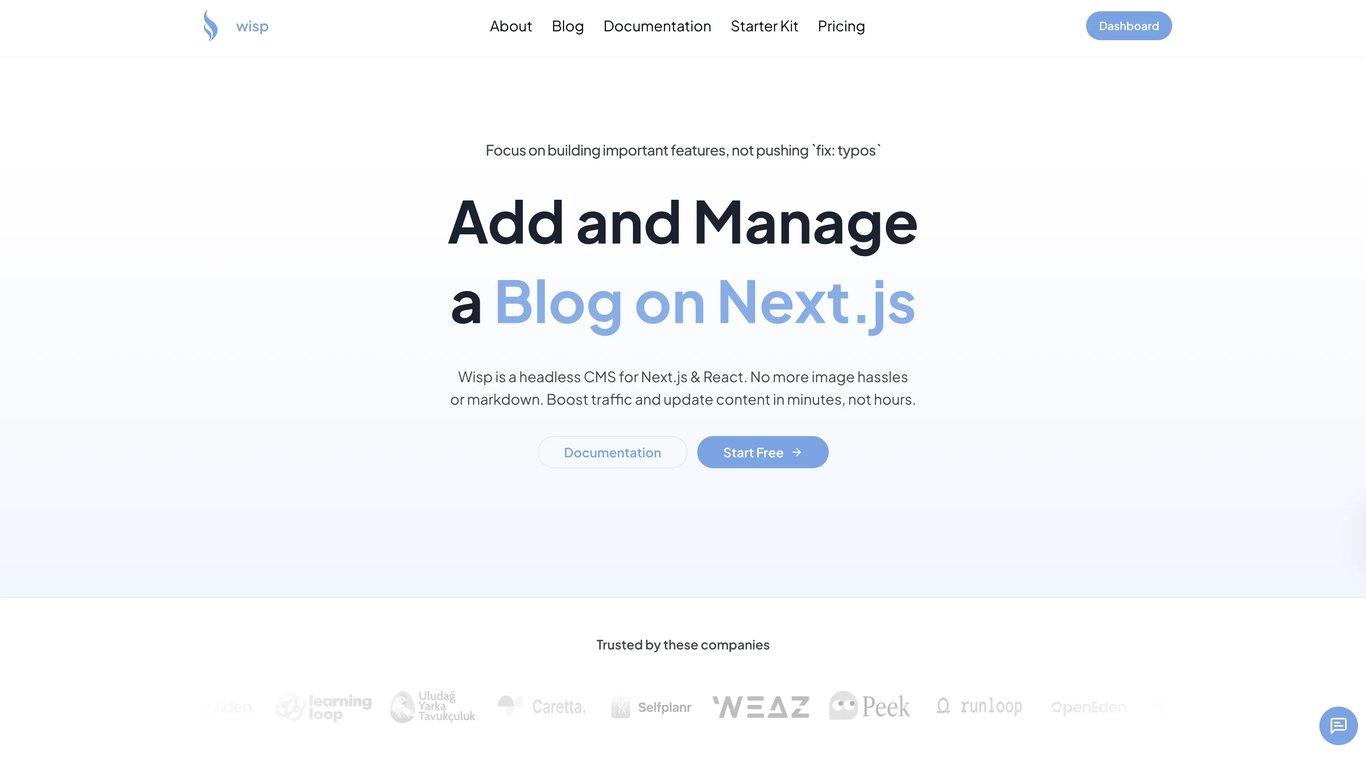 What it is: A headless CMS built specifically for adding a modern blog to Next.js and React sites. It handles all the "blog plumbing" so your engineering team doesn't have to.
Why it's great for early-stage startups:
Developer marketing runs on high-quality technical content. The problem? Creating this content often becomes an engineering bottleneck. Wisp removes this friction by separating content from your codebase.
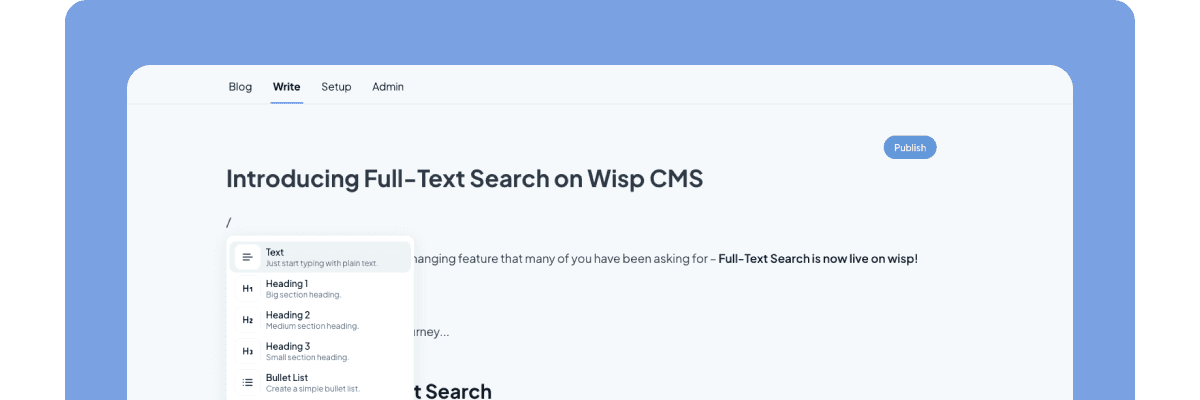
Non-developers can create and manage posts in a clean, Notion-style editor without needing to know Markdown or submit a pull request. Meanwhile, developers only need to integrate it once using the lightweight Content API and JS SDK.
Wisp includes essential features like global CDN for media delivery, SEO implementation guidance, and even multi-tenancy for managing multiple blogs under one account—perfect if you're building developer documentation alongside your main blog.
Pricing:
Free Forever: Core features with Wisp attribution. Unlimited blogs and posts.
Pro & Indie Hacker Pass: Paid plans for teams and solo creators who want to remove attribution.
Implementation Difficulty: Low. Use the Next.js Blog Starter Kit to get a blog running in hours, not days.
Expected Timeframe for Results: Immediate for content publication. You can write and publish your first technical tutorial on day one. SEO benefits and organic traffic will build over the following 3-6 months.
2. EthicalAds: Reach Developers Where They Learn
What it is: A privacy-focused ad network that serves contextual ads on developer-focused websites, including project documentation and technical blogs.
Why it's great for early-stage startups:
Most ad networks rely on invasive tracking, which developers often block. EthicalAds respects developer privacy by avoiding behavioral tracking entirely. Instead, ads are targeted based on the content of the page, making them relevant and less intrusive.
This approach places your product in front of developers while they're actively learning or solving problems—the perfect moment to introduce a relevant tool.
Pricing: Very affordable, with Cost-Per-Mille (CPM) rates typically between $2-$5.
Implementation Difficulty: Low. Their self-service platform makes it easy to create and launch campaigns.
Expected Timeframe for Results: Immediate exposure on relevant developer sites, with click data available within days.
3. GitHub Sponsors: Build Community and Brand Goodwill
What it is: A platform built into GitHub that allows individuals and companies to financially support open-source projects and maintainers they depend on.
Why it's great for early-stage startups:
This is a powerful, low-cost community marketing play. Sponsoring open-source projects that your product depends on accomplishes several things simultaneously:
Your logo appears on the project's GitHub page, building organic brand awareness
You demonstrate genuine support for the ecosystem you're part of
You build goodwill with the maintainers and users of those projects—many of whom might be potential customers
Unlike traditional advertising, GitHub Sponsorship feels authentic because it genuinely is. You're not interrupting developers; you're supporting the tools they already care about.
Pricing: Extremely flexible. Sponsorship tiers can start as low as $30/month.
Implementation Difficulty: Very Low. Simply create a GitHub Sponsors account and choose which projects to support.
Expected Timeframe for Results: This is a long-term strategy for community building, but brand recognition is immediate upon sponsoring.
4. Google Alerts: Your Free Social Listening Engine
What it is: A free content monitoring service from Google that sends you email notifications when it finds new results—such as web pages, newspaper articles, or blogs—that match your search terms.
Why it's great for early-stage startups:
Enterprise social listening tools like Brandwatch or Sprinklr can cost thousands of dollars monthly. Google Alerts is free and powerful enough for a startup's needs. You can use it to:
Find Content Ideas: Monitor keywords related to developer pain points (e.g., "electron app distribution issues," "notion api documentation confusion")
Track Competitors: Get notified when a competitor is mentioned online
Monitor Your Brand: See who is talking about your product
The insights you gather can directly inform your content strategy, product roadmap, and messaging.
Pricing: Free
Implementation Difficulty: Very Easy. Takes less than 5 minutes to set up.
Expected Timeframe for Results: Immediate alerts as new content is indexed by Google.
5. daily.dev Ads: Target by Tech Stack
What it is: An ad platform within the popular daily.dev content aggregator for developers. It places your content or ad directly in developers' personalized news feeds.
Why it's great for early-stage startups:
daily.dev offers advanced targeting based on developers' preferred tech stacks, interests, and seniority levels. This precision is ideal when you have a clear idea of your ideal customer profile.
For example, if your product is built specifically for React developers working at startups, you can target exactly that segment—minimizing wasted impressions and maximizing conversion potential.
Pricing: Higher entry point, with a minimum spend starting at $5,000. Best for startups with some initial funding or revenue.
Implementation Difficulty: Medium. The platform requires thoughtful campaign setup to get the most from your investment.
Expected Timeframe for Results: Immediate views in developer content feeds, with engagement metrics available within the first week.
6. Dev.to Sponsored Posts: Tap Into an Engaged Community
What it is: Dev.to is a large, active online community for developers. They offer sponsored post packages (called "Forem Ads") where your technical article is promoted within the community feed.
Why it's great for early-stage startups:
Instead of trying to build an audience from scratch, you can leverage Dev.to's massive, engaged user base. This is perfect for amplifying a high-quality, in-depth tutorial or guide that showcases your product's value.
The key to success here is creating genuinely useful content that happens to feature your product—not thinly-veiled advertisements. As PostHog's developer marketing guide emphasizes, your content should "compete on depth, not breadth" and be "genuinely useful."
Pricing: Sponsorship starts at $5,000.
Implementation Difficulty: Medium. Success depends entirely on the quality and utility of the content you provide.
Expected Timeframe for Results: 1-2 weeks to see meaningful engagement data (views, reactions, comments).
7. LinkedIn Developer Ads: Precision Targeting for B2B
What it is: LinkedIn's ad platform, which allows for hyper-specific targeting of professionals based on job title, company, skills, and industry.
Why it's great for early-stage startups:
LinkedIn offers unmatched precision for B2B SaaS targeting. If your ideal customer is a "Site Reliability Engineer" at a "fintech startup with 50-200 employees," LinkedIn is the most efficient platform to reach them.
While other platforms offer demographic targeting, only LinkedIn can target based on professional attributes with high accuracy. This precision means your limited budget goes further.
Pricing: Scalable, with campaigns possible starting at just $10/day.
Implementation Difficulty: Medium. As PostHog advises, you must "avoid default settings" and be meticulous with your audience targeting to avoid wasting your budget.
Expected Timeframe for Results: First campaign results are typically visible within 48-72 hours, with optimization opportunities becoming clear within 1-2 weeks.
How to Prioritize Your Tool Stack: A Decision Framework
As a startup, you can't—and shouldn't—use all these tools at once. Here's a framework to help you decide where to start based on your stage and available resources.
Phase 1: Pre-Product-Market Fit (Focus on Foundation)
Goal: Build an audience and establish credibility by being helpful.
Priority 1: Content & Listening (Cost: $0)
Wisp (Free Plan): Set up your blog. Start writing the one "genuinely useful" article you wish you had when you started.
Google Alerts (Free): Set up alerts to find what developers are struggling with. Let this fuel your content strategy.
Priority 2: Community & Goodwill (Cost: <$100/mo)
GitHub Sponsors: Find a small, critical open-source dependency you use and sponsor it. It's the most authentic marketing you can do.
Phase 2: Post-Product-Market Fit (Focus on Amplification)
Goal: You have a product that solves a real problem. Now, scale your reach.
Priority 3: Low-Cost, Contextual Ads (Cost: $100s/mo)
EthicalAds: Start a small campaign here. The audience is highly relevant, and the cost is low, making it a great place to test your messaging.
Priority 4: Targeted Campaigns (Cost: $1000s/mo)
LinkedIn Ads: If you have a clear B2B customer profile, run a highly-targeted campaign.
Dev.to / daily.dev Ads: When you have a budget and a killer piece of content, use these platforms to amplify it to a massive, engaged audience.
From Code to Content: Your First Step
Developer marketing feels daunting because the word "marketing" itself often feels inauthentic. But the most effective developer marketing isn't about slick campaigns; it's about sharing knowledge and solving problems—something every developer does daily.
The tools in this guide aren't just for pushing a product. They are channels for helping your future users.
Google Alerts helps you find the problems they're facing.
GitHub Sponsors helps you support the tools they rely on.
A blog, powered by Wisp, becomes the home for the solutions you create.
It's a simple, powerful loop: listen to the community, create genuinely useful content that solves their pain, and use ethical channels to share it. You don't need a massive budget, just a commitment to being helpful.
The journey from a great product to a thriving user base starts with a single, useful piece of content. What problem can you solve for another developer today?
Ready to build your content foundation? Start your free developer blog with Wisp in minutes.
Frequently Asked Questions
What is the single most important developer marketing tool for a startup?
The single most important tool for a startup is a blog. It's the foundation for creating content that builds trust, demonstrates expertise, and generates long-term organic traffic.
How can I market to developers without a large budget?
To market to developers without a large budget, focus on free tools. Use a free blog for content, Google Alerts for listening, and GitHub Sponsors for authentic community building.
Why is marketing to developers so difficult?
Marketing to developers is difficult because they value authenticity and technical substance. They resist sales pitches and demand genuinely useful content that solves a real problem.
What kind of content should I create for a developer audience?
For a developer audience, create in-depth, useful technical content. Focus on tutorials, deep-dives, and articles that solve a specific problem or teach a valuable skill.
Are paid ads effective for reaching developers?
Yes, paid ads are effective for reaching developers if they are privacy-respecting and contextually relevant. Ads on developer-specific platforms work best.
How long does it take to see results from developer marketing?
The time to see results from developer marketing varies. Paid ads show results in days, while content marketing and SEO can take 3-6 months to build significant organic traffic.
What is the difference between EthicalAds, daily.dev, and Dev.to ads?
The difference between these ad platforms is targeting. EthicalAds is contextual, daily.dev targets by tech stack, and Dev.to promotes your content within its community feed.