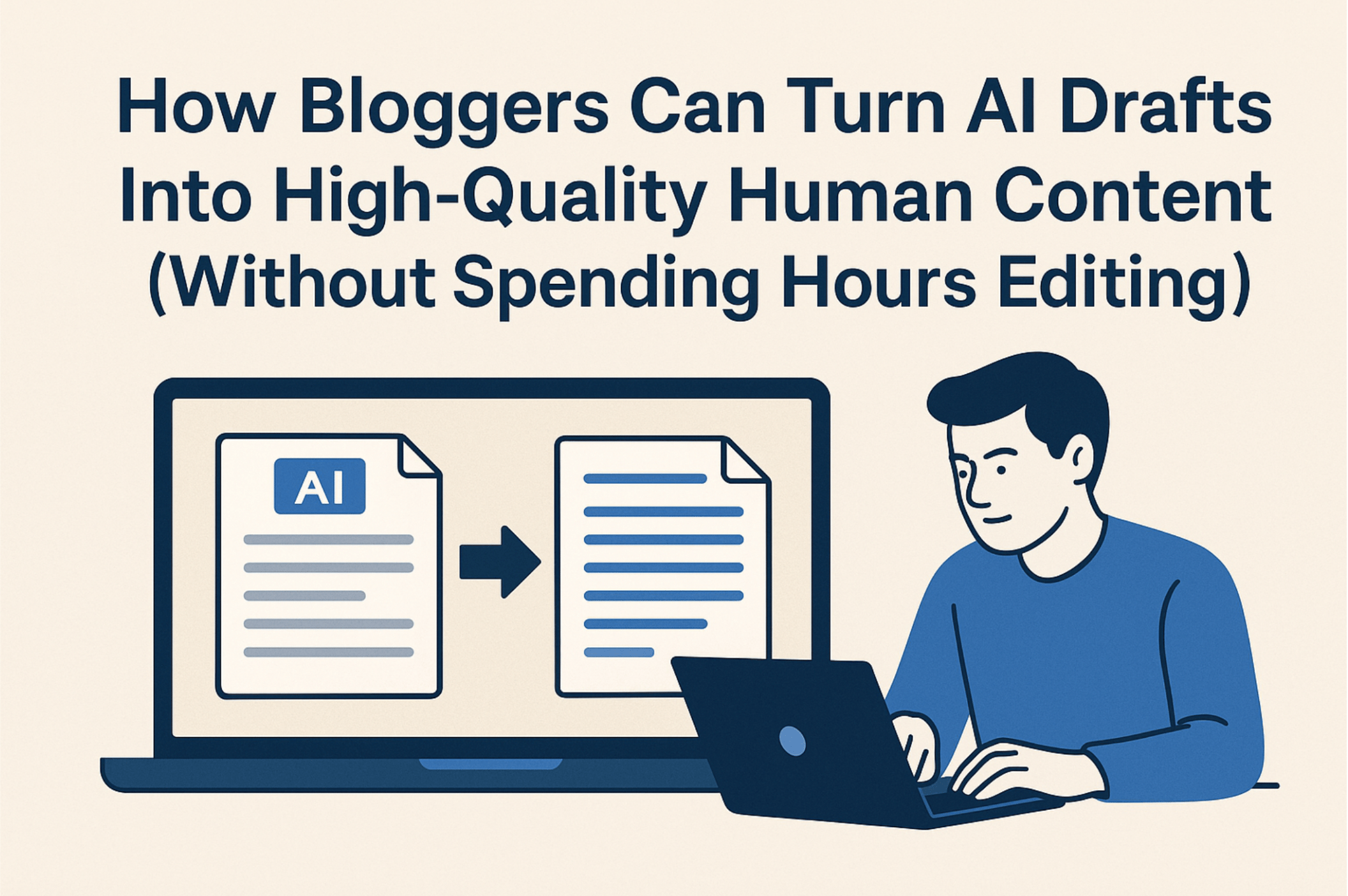
 Artificial intelligence has completely transformed blogging. Creators can now generate full articles in minutes, outline complex topics instantly, and overcome writer’s block with a single prompt. But there’s one major problem: AI-generated writing often sounds robotic, repetitive, and unnatural—and readers notice it.
As search engines become better at detecting formulaic AI patterns, bloggers are facing a new challenge:How do you keep the speed of AI while preserving human tone, authenticity, and engagement?
In this guide, we’ll explore why human-sounding writing matters in 2025 and how creators can quickly transform AI drafts into natural, high-quality blog content.
Why AI-Written Blog Posts Often Underperform
AI is excellent at generating structure and ideas—but not tone. Most AI models:
reuse the same phrasing across topics
write in a predictable rhythm
emphasize generic transitions (“In conclusion”, “Furthermore”, “Moreover”)
lack personal voice, storytelling, and emotional nuance
For readers, that translates into writing that feels:
“flat”
too polished
overly formal
disconnected from real human experience
This directly affects engagement—bounce rates rise, time-on-page drops, and trust decreases.
For bloggers, this means you must add a human layer to AI-generated drafts.
Why Human-Sounding Content Performs Better in SEO
Search engines are not “punishing” AI content—but they do evaluate:
originality
natural linguistic variation
reader experience
clarity
usefulness
Humanized writing tends to outperform because it contains:
unique phrasing
emotional tone
relatable examples
natural sentence rhythm
better storytelling
Improving these elements can significantly boost SEO, especially for long-form blogs.
A Fast Workflow: AI Speed + Human Quality
Here’s the blogging workflow modern creators use to publish faster without sacrificing quality:
1. Generate a quick AI draft
Use any AI tool to create:
structure
key ideas
main talking points
transitions
This saves you hours of time
2. Make the draft sound human
Before publishing, run the content through a humanization tool that rewrites overly robotic text while keeping meaning intact.
This is where the Text to Human tool helps: it rewrites AI-style sentences into natural, more human-sounding language while preserving clarity and SEO keywords.
You can use it to make AI text sound natural in seconds—no manual editing needed.
3. Final edit inside your CMS
Once the text feels natural, move it into your CMS (such as Wisp) and:
adjust formatting
update headings
add internal links
optimize images and metadata
polish your intro and conclusion
With this workflow, your content keeps the speed of AI + voice of a human.
Example: From Robotic to Human
AI version: “Bloggers should optimize their content because SEO is important for visibility and it increases website rankings.”
Humanized version: “If you want your blog to actually show up when people search, SEO isn’t optional. A few smart fixes can make your articles more discoverable and bring in more readers naturally.”
This simple transformation creates stronger connection, trust, and engagement.
What Makes Human-Like Writing So Effective?
Human-sounding content helps you stand out because it adds:
Emotion (subtle tone shifts AI can’t replicate)
Voice (your personality and style)
Specific examples that feel lived-in
Authenticity, which increases trust
With millions of AI-generated posts appearing daily, humanization is becoming a competitive advantage for creators.
Conclusion: AI + Humanization Is the New Blogging Standard
AI helps you write fast. But human-like writing helps you grow.
By combining both, bloggers get the best of both worlds:
AI for structure and speed
Humanization for tone, personality, and SEO
A CMS like Wisp for clean publishing and formatting
If you’re creating AI-assisted content in 2025, the smartest move is to run your drafts through a humanizer to upgrade quality before you hit publish. Start by using the Text to Human tool to quickly make AI text sound natural and improve the readability, trust, and engagement of your blog posts.