 Summary
Next.js is the definitive framework for B2B SaaS, enabling developers to build secure, high-performance applications with features like Role-Based Access Control (RBAC) and seamless authentication.
Real-world case studies show tangible results, such as a 43% reduction in bundle size through Next.js's built-in optimization tools.
Successful companies leverage Next.js for hybrid rendering, using static generation for fast, SEO-friendly marketing sites and server-side rendering for complex, authenticated dashboards.
Building a modern B2B SaaS platform presents unique challenges. Developers often struggle with questions like, "How should we properly protect routes with RBAC?" or "What are the best patterns for handling authenticated CRUD actions?" These aren't just theoretical concerns—they're daily hurdles in building scalable SaaS products.
Next.js has emerged as the definitive solution to these challenges, enabling developers to build secure, high-performance, and scalable B2B applications faster. From server components to built-in optimizations, Next.js provides the tools needed to create world-class SaaS experiences.
In this article, we'll move beyond theory and showcase seven real B2B companies leveraging Next.js to solve these exact problems, detailing their technical implementations and the business results they've achieved.
1. Wisp.blog: Headless CMS Purpose-Built for Next.js
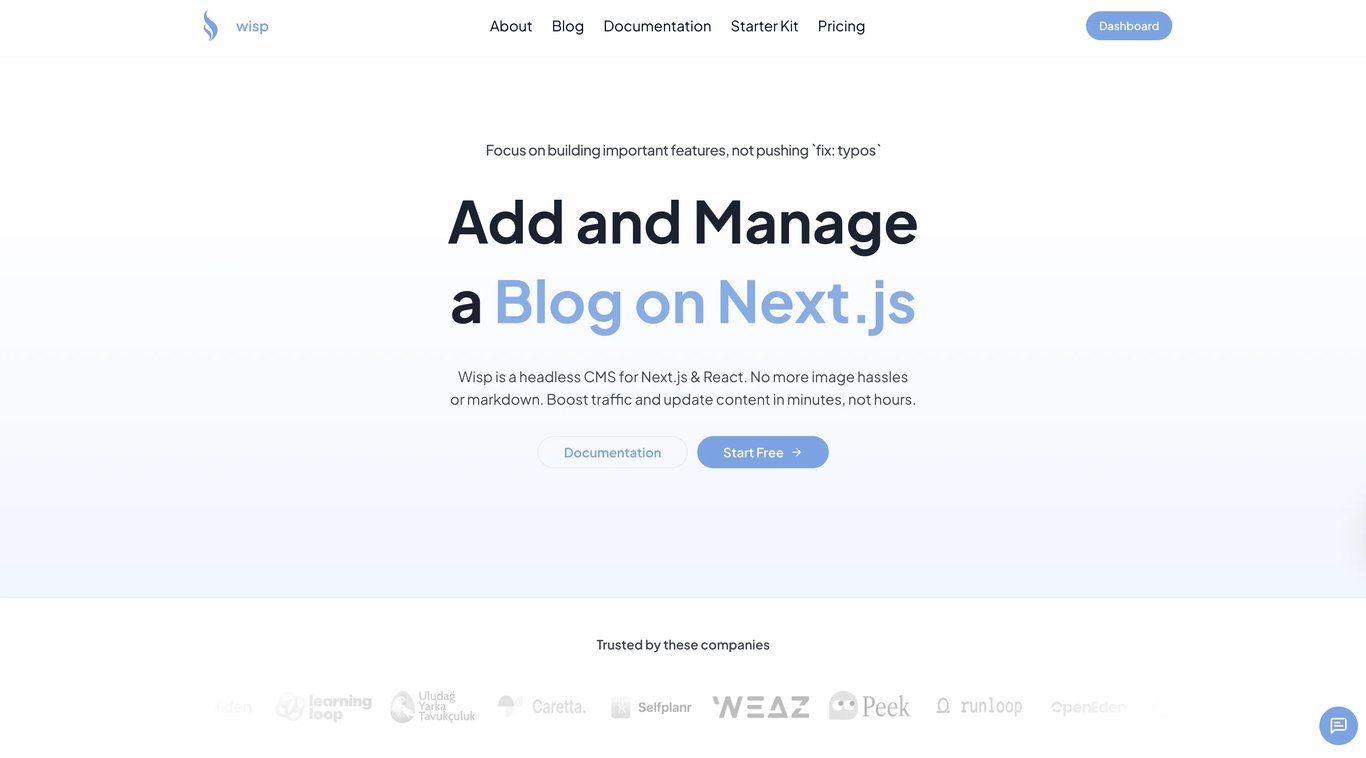
Wisp.blog stands as a prime example of a B2B SaaS built specifically for the Next.js ecosystem. This headless CMS removes engineering bottlenecks associated with managing blogs on Next.js or React sites.
How They Use Next.js
Wisp is designed specifically to be consumed by Next.js frontends. It provides a lightweight Content API and a JavaScript SDK with TypeScript types for seamless integration, allowing SaaS teams to fetch and render blog content within their existing Next.js app.
Technical Implementation
// Simple integration with the Wisp SDK
import { createWispClient } from '@wisp/sdk';

const wispClient = createWispClient({
  blogId: process.env.WISP_BLOG_ID,
});

// In a Next.js app route or page
export async function generateMetadata() {
  const post = await wispClient.getPost('my-post-slug');

  return {
    title: post.title,
    description: post.description,
    // Wisp automatically provides SEO metadata
  };
}
Wisp's architecture includes:
Developer-Friendly Workflow: Integration is as simple as signing up, grabbing a Blog ID, and using the SDK to fetch posts
Non-Developer Publishing: A distraction-free, Medium/Notion-style editor that doesn't require Markdown knowledge
Performance-First Architecture: All content and images are served via a global CDN
Built-in SEO Guidance: Provides implementation guidance for metadata, JSON-LD, and sitemaps
Business Outcome
By separating content management from the development cycle, Wisp enables bootstrapped startups and small teams to achieve high content velocity. Engineers can focus on core product features while marketers can publish freely, significantly reducing development overhead for content updates.
2. WorkOS: A Next.js B2B Starter Kit for Rapid Development
The WorkOS Next.js B2B Starter Kit provides a fully functional B2B SaaS template that addresses the common need for "a valuable learning resource" with "specific SaaS features."
How They Use Next.js
The entire template leverages Next.js's file-based routing, server components, and API routes to create a complete B2B SaaS experience out of the box.
Technical Implementation
The starter kit includes:
Comprehensive Feature Set: A marketing splash page, pricing page with Stripe Checkout, admin dashboard, and critically, Role-Based Access Control (RBAC)
Modern Tech Stack: Built with Next.js, Convex (database), and AuthKit for authentication
Core B2B Logic: Handles billing, audit logs, and webhook syncing
// Example of RBAC implementation in the WorkOS starter
import { requireUser } from '@/lib/auth';

export default async function AdminDashboard() {
  const user = await requireUser({
    requiredRole: 'admin',
    redirectTo: '/login',
  });

  // Only admins will reach this point
  return <AdminInterface user={user} />;
}
Business Outcome
This starter kit dramatically reduces time-to-market for new B2B SaaS products. Developers can skip foundational setup work and jump straight to building unique features. A live demo is available at next-b2b-starter-kit.vercel.app.
3. Stytch: Seamless B2B Authentication with Next.js SDK
Stytch provides B2B authentication solutions with a dedicated Next.js SDK, addressing the developer need for templates and examples that handle authentication, including OAuth 2.0.
How They Use Next.js
The @stytch/nextjs SDK is optimized for the framework, supporting server-side rendering and providing pre-built UI components that integrate naturally with Next.js applications.
Technical Implementation
Stytch's integration is straightforward:
# Quick SDK installation
npm install @stytch/nextjs @stytch/vanilla-js --save
# Environment configuration
NEXT_PUBLIC_STYTCH_PROJECT_ENV=test
NEXT_PUBLIC_STYTCH_PUBLIC_TOKEN="YOUR_STYTCH_PUBLIC_TOKEN"
// app/layout.tsx
import { StytchB2BProvider } from '@stytch/nextjs/b2b';
import { createStytchB2BUIClient } from '@stytch/nextjs/b2b/ui';

const stytchClient = createStytchB2BUIClient(process.env.NEXT_PUBLIC_STYTCH_PUBLIC_TOKEN);

export default function RootLayout({ children }) {
  return (
    <StytchB2BProvider stytch={stytchClient}>
      <html>
        <body>{children}</body>
      </html>
    </StytchB2BProvider>
  );
}
Stytch also provides clear patterns for using their Node SDK within Next.js 13+ Server Components for secure backend operations.
Business Outcome
Stytch allows SaaS companies to implement enterprise-grade authentication (including magic links, SSO, etc.) in a fraction of the time, enhancing security and user experience without massive engineering investment. An example app is available on GitHub.
4. Syncfusion: A Case Study in Next.js Performance Optimization
While Syncfusion is a component library provider, their public case study on optimizing their Next.js app demonstrates powerful real-world performance optimizations.
How They Used Next.js
Syncfusion systematically applied Next.js's built-in optimization techniques to dramatically improve their site's performance metrics.
Technical Implementation
Their optimization strategy included:
Bundle Analysis: Used
@next/bundle-analyzerto identify and replace large libraries# Installing the bundle analyzer npm install @next/bundle-analyzerLazy Loading Components: Implemented dynamic imports for non-critical UI
const Modal = dynamic(() => import('../components/modal'));Image Optimization: Leveraged Next.js's built-in image component
<Image src="image-url" width={1200} height={400} alt="Product screenshot" />Code Splitting: Used specific imports instead of entire libraries
// Instead of import _ from 'lodash'
import _get from 'lodash/get'
Business Outcome
The results were impressive: a 43% reduction in bundle size and a Google PageSpeed Insights score improvement from 36 to 73. This demonstrates the direct business impact of performance optimization on user experience and SEO.
5. Peek: Enterprise-Grade Reliability and User Experience
Peek.com, an activity booking platform, uses Next.js to power its user-facing marketplace and partner tools, highlighting Next.js's capability in handling complex, dual-sided B2B/B2C platforms.
How They Use Next.js
Peek leverages Next.js for fast performance on public-facing pages (improving SEO) and its dynamic capabilities for the authenticated partner dashboard where businesses manage their bookings.
Technical Implementation
Hybrid Rendering: Uses Static Site Generation (SSG) for marketing and listing pages for maximum speed and SEO, while using Server-Side Rendering (SSR) for dynamic, user-specific data in the partner portal
API Routes: Manages backend logic for bookings, scheduling, and payments through Next.js API routes, creating a cohesive full-stack application
Business Outcome
The performant frontend drives customer acquisition through organic search, while the robust backend provides a reliable platform for business partners, showcasing Next.js's versatility for complex marketplace applications.
6. Openeden: Leveraging Next.js for Complex Data Platforms
Openeden is a platform for investing in tokenized real-world assets. Their application requires high security, reliability, and the ability to present complex financial data clearly.
How They Use Next.js
Next.js provides the secure and performant foundation needed for a fintech application. Server components allow them to securely fetch sensitive financial data on the server, preventing exposure to the client.
Technical Implementation
Server Components for Security: Critical data fetching and business logic are handled on the server, reducing the client-side attack surface
Dynamic Data Visualization: Integrates with charting libraries, using Next.js to SSR the initial chart structure for a fast perceived load time, then hydrating on the client for interactivity
Business Outcome
Next.js enables Openeden to build a trustworthy and responsive platform, which is critical for user confidence in the financial technology space. The performance and security features of Next.js directly translate to better user trust and engagement.
7. Runloop: Developer Tools Built for Speed and Efficiency
Runloop helps teams manage and automate their on-call workflows and incident response. As a tool for developers, performance and a slick UI are paramount.
How They Use Next.js
The entire dashboard and marketing site are built with Next.js, prioritizing a fast developer experience. They leverage features like React Server Actions for form submissions and mutations to create a seamless, app-like feel.
Technical Implementation
Optimistic UI with Server Actions: By using server actions, they implement optimistic UI updates for actions like acknowledging an alert or creating a task, making the application feel instantaneous
Static Marketing Site: The marketing site is statically generated for peak performance and SEO, potentially using a headless CMS (like Wisp) to manage content
Business Outcome
A fast, responsive application is a key selling point for a developer tool. By using Next.js, Runloop delivers a premium user experience that resonates with its technical audience, helping them stand out in a competitive developer tools market.
Build Faster, Publish Smarter With Next.js + Wisp
Next.js has proven to be more than just a framework; it's a complete ecosystem for building world-class B2B SaaS applications. From headless CMS platforms like Wisp to developer tools like Runloop, companies are leveraging its performance, security, and developer experience to win in competitive markets.
If you're looking to build a new B2B SaaS platform or optimize your existing Next.js application, you don't have to do it alone. You can pair Next.js with a headless CMS that doesn’t slow you down. Try Wisp and see how fast it feels to publish, manage, and ship content into your Next.js stack—without the usual overhead.
By adopting the patterns and technologies used by these successful companies, you can accelerate your development timeline, improve performance, and deliver a superior user experience that drives growth for your B2B SaaS platform.
Frequently Asked Questions
Why is Next.js recommended for building B2B SaaS platforms?
Next.js is recommended for building B2B SaaS platforms because it blends SSR/SSG for speed + SEO, scales cleanly, and improves dev workflow. Server-first patterns keep sensitive logic off the client, and the ecosystem offers starter kits for auth, RBAC, and billing.
What are some key B2B features that Next.js helps build?
Next.js helps build key B2B features because it supports auth, RBAC, team dashboards, billing, and secure APIs in one framework. File-based routing and API routes simplify product + backend development, and popular SDKs/starter kits speed up common enterprise needs.
How does Next.js improve the performance of a SaaS application?
Next.js improves SaaS performance because it includes code splitting, image optimization, and flexible rendering (SSG/SSR). You can pre-render marketing pages for fast loads, then use server rendering for app pages that need fresh data—improving UX and SEO signals.
How does Next.js enhance security for B2B SaaS applications?
Next.js enhances security for B2B SaaS apps because you can run sensitive logic on the server using Server Components and API routes. That reduces browser exposure, keeps secrets server-side, and lets you enforce auth checks before returning data or rendering protected pages.
What is Role-Based Access Control (RBAC) and how does Next.js support it?
RBAC is a way to limit access based on user roles, and Next.js supports it because you can enforce role checks server-side via middleware, route protection, and session validation. That means users only see authorised pages and data before anything loads client-side.
Is Next.js suitable for both the marketing website and the actual product?
Next.js is suitable for both marketing and product because you can use SSG for fast, SEO-friendly public pages and SSR/client rendering for logged-in dashboards—within one codebase. This reduces duplicated work, keeps UI consistent, and simplifies performance tuning.