Sales automation reduced the effort required to execute sales activities.
Then AI entered the sales stack to push that efficiency further, primarily by optimizing execution inside individual tools such as CRMs and outreach platforms.
However, a sales stack is only as good as the foundation it sits on. Today, that foundation is technical. Modern sales teams rely heavily on developers to integrate APIs, maintain website performance for SEO, and manage the content pipelines that generate leads in the first place.

As a result, emails, follow-ups, and task execution became easier to automate. What didn’t improve was visibility into which actions—from a blog post read by a developer to a demo booked via API—influenced deal progression and revenue outcomes.
That limitation matters because sales data rarely lives in one place. Activity, pipeline movement, revenue signals, and content analytics are spread across systems, making analysis incomplete by default.
AI sales automation becomes effective when that data is connected and analyzable. Only then can AI surface patterns, support forecasting, and guide decisions instead of simply executing tasks.
This article walks you through 7 AI sales automation tools built around that capability. Each one addresses a specific constraint in the sales workflow, helping teams reduce effort by increasing clarity.
The 7 Best AI Sales Automation Tools in 2026
Whether you are a developer looking to streamline data flows for your revenue team, or a sales leader seeking better visibility, these platforms represent the best-in-class solutions for modern, tech-forward sales operations.
1. Windsor.ai: Top AI Sales Automation Tool for Data Integration and AI Insights
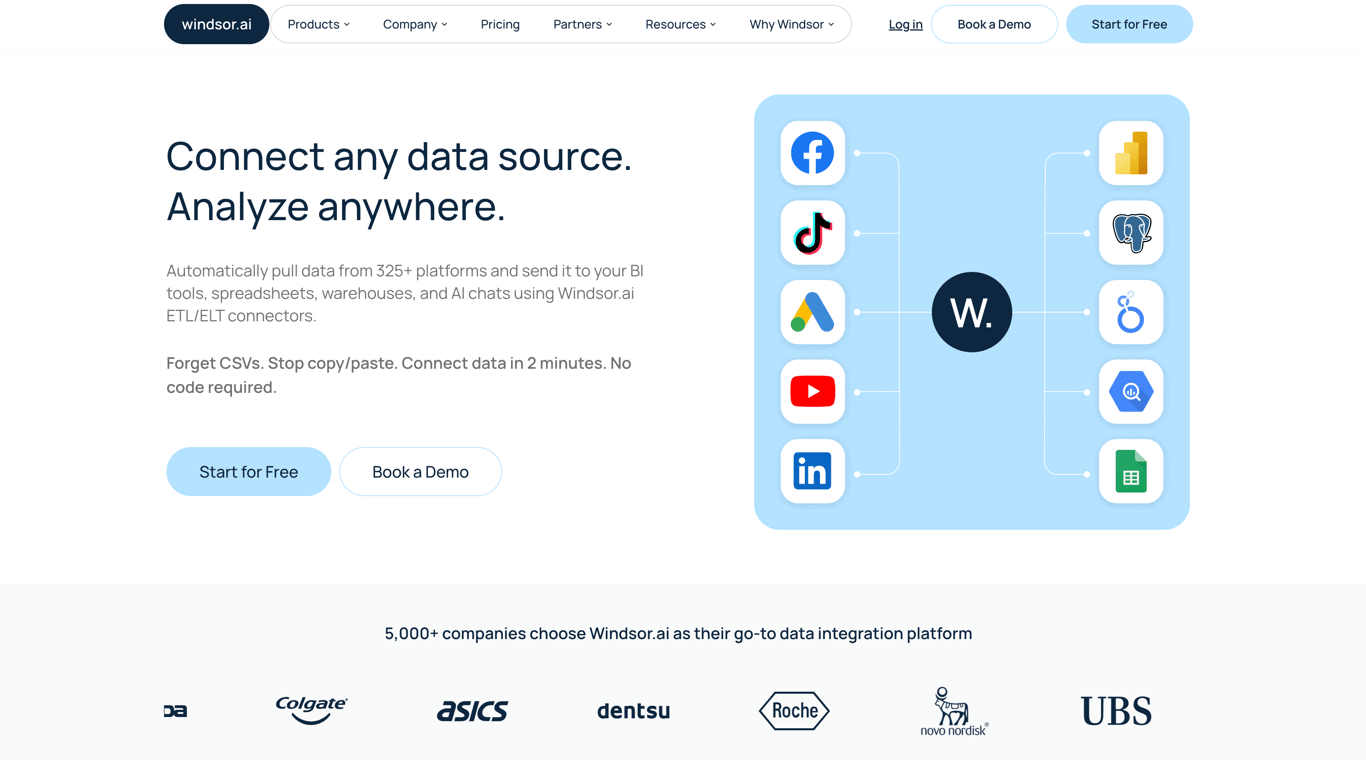
Windsor.ai works perfectly for teams that have outgrown CRM-native reporting because sales data needs to be analyzed in environments that support forecasting, modeling, and AI analysis.
For technical teams and developers supporting sales operations, data silos are a nightmare. Windsor.ai acts as the bridge, collecting sales data from widely used tools such as HubSpot, Pipedrive, and 325+ other business systems, and standardizing it for downstream use. As a result, pipeline changes, deal stages, and revenue signals are captured without manual exports or complex custom scripting.
That data is then routed into analytical environments where decisions are made. From there, teams can connect HubSpot data to BigQuery and analyze sales performance through predictive models rather than static reports. Other supported destinations are BI tools (Looker Studio, Power BI, Tableau), spreadsheets, databases, and data warehouses.
Additionally, Windsor.ai supports AI-driven insight workflows by unifying sales data and routing it into AI chats. Teams can then ask questions in Claude, ChatGPT, or other LLMs about pipeline health, deal velocity, and forecast risk using their own data rather than surface-level summaries.
Windsor.ai supports decision-making through four core capabilities:
Cross-platform sales data collection: Sales data is pulled from major platforms and normalized so it can be analyzed consistently across systems.
Analytics-first data delivery: Data is sent into warehouses and BI tools for automated reporting and advanced queries, reducing the burden on engineering teams to build custom ETL pipelines.
Predictive readiness: Clean schemas and scheduled syncs keep datasets usable for forecasting and trend analysis.
AI insight activation: Sales data becomes accessible through AI chats for faster interpretation and exploration.
Verdict: Windsor.ai is the right fit if your sales data needs to feed forecasting models, dashboards, and AI analysis outside the CRM, specifically appealing to organizations that treat data as a product managed by technical teams.
2. HubSpot Sales Hub: AI-Driven CRM Automation
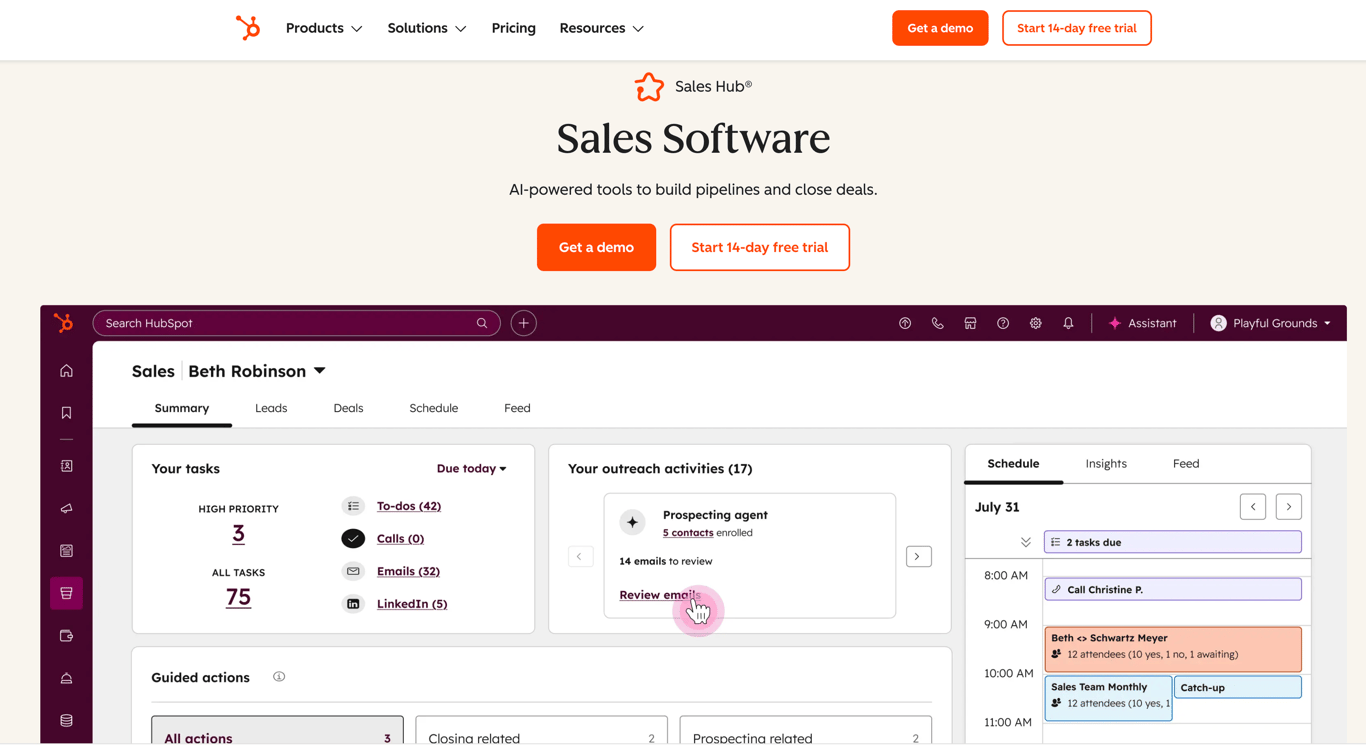
Sales execution breaks down when priorities are unclear, and follow-up depends on memory. As the number of active deals increases, coordination becomes harder unless the CRM provides a clear structure for daily work.
HubSpot Sales Hub is designed to keep execution disciplined within a single system. However, for many modern companies, the sales stack is "composable." While HubSpot handles the CRM, developers often prefer using a headless CMS like Wisp to manage the main marketing site and blog. This separation allows the engineering team to use modern frameworks (like Next.js) for performance, while HubSpot captures the resulting leads.
Inside the CRM, HubSpot’s AI features help highlight which leads and deals need attention, then automate the next steps so momentum is maintained across the pipeline.
Prioritization is based on real engagement and behavior, so sales reps can quickly see which opportunities show buying intent, spend less time on low-impact outreach, and keep their efforts tied directly to pipeline movement.
With priorities set, HubSpot automates the operational layer of sales work through:
AI-assisted lead scoring and deal ranking: Opportunities are ordered by likelihood to convert, creating a clear sequence for outreach.
CRM-native workflow automation: Tasks, reminders, and stage updates trigger automatically based on deal activity, removing the need for manual tracking.
Activity-based reporting: Pipeline changes and rep actions are logged directly in the CRM, keeping visibility intact without external tools.
Verdict: HubSpot Sales Hub fits teams that want prioritization and execution handled inside one system. It pairs exceptionally well with external content platforms like Wisp, where developers handle the frontend experience and HubSpot captures the backend data.
3. Gong: AI Sales Intelligence for Conversation Analysis
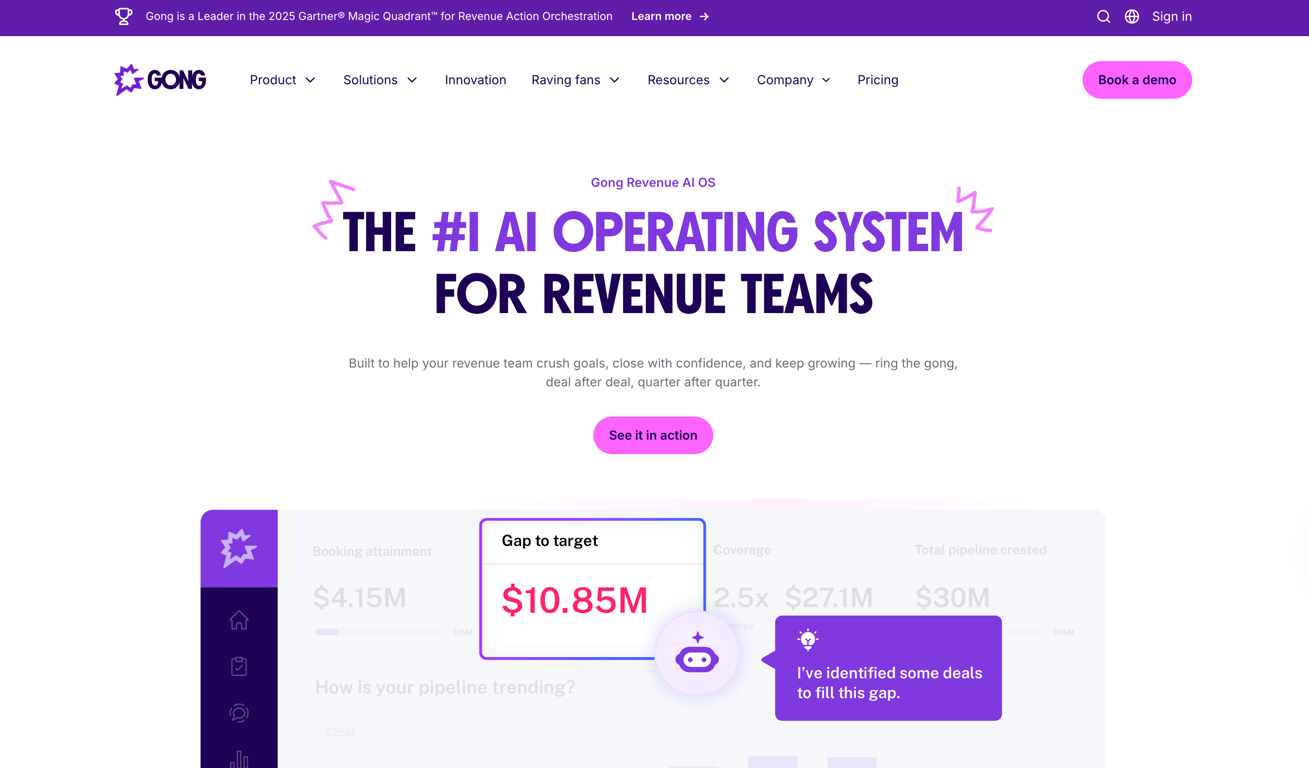
Sales conversations hold the clearest signals of how likely a deal is to close, but those signals rarely reach structured records. Gong captures and transcribes calls, meetings, and email interactions to create a searchable record of buyer engagement.
Raw transcripts alone do not scale. Gong analyzes those conversations to show patterns, flag deal risk, and highlight the moments that shift buyer intent. The result is a set of signals sales teams can act on, instead of relying on memory or secondhand updates.
Gong then turns those conversations into four decision signals sales teams can act on:
Automatic recording and transcription: Every sales call, meeting, and supported email interaction is captured automatically, removing gaps caused by partial notes.
Conversation-driven deal risk detection: Unresolved objections, pricing hesitation, or long gaps in communication stand out early, giving teams a chance to step in before deals drift.
Rep coaching based on real interactions: Teams can go back to real moments from calls to spot skill gaps, reinforce what works, and coach using concrete examples.
Pipeline insight from aggregated conversation signals: Conversation patterns across deals are combined to highlight forecast risk and shifts in deal confidence earlier than pipeline stages alone.
Verdict: Choose Gong when deal quality, seller effectiveness, and early risk detection matter more than managing outreach workflows.
4. Apollo.io: AI-Powered Prospecting and Outreach
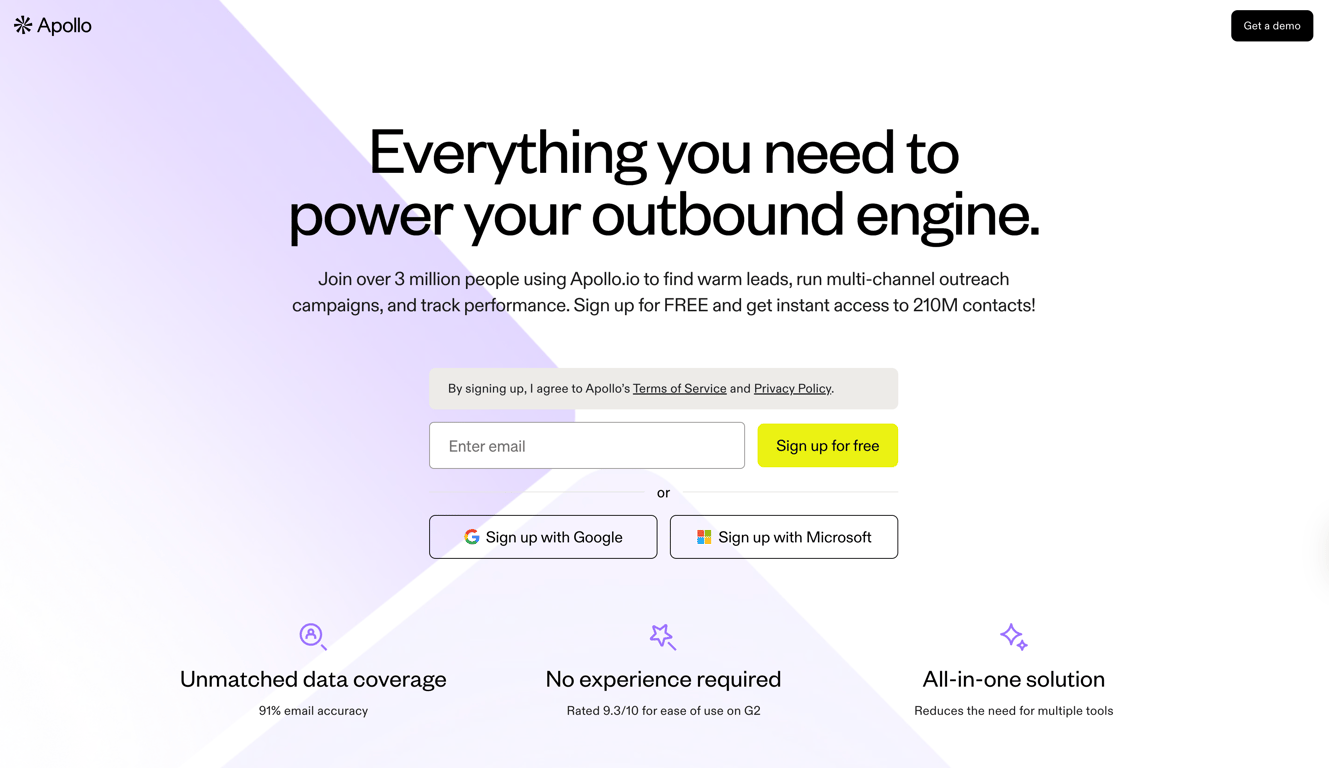
When prospecting and outreach feel disconnected, time gets lost between finding leads and reaching out. Apollo.io removes that gap by keeping targeting, prioritization, and engagement in one continuous workflow.
Prospects are pulled from a large B2B contact database and narrowed using filters based on role, company profile, and buying signals. This keeps targeting precise and avoids rebuilding lists across multiple tools.
Critically, successful outreach often depends on having the right content to share. Sales development reps (SDRs) need high-quality blog posts, technical case studies, and whitepapers to send to prospects. This is where a seamless link between the content team (using tools like Wisp) and the sales team (using Apollo) becomes vital.
Once priorities are set, they flow straight into execution. Apollo supports this workflow through four execution controls:
Targeted lead discovery: Filters and enrichment help teams focus prospect lists on the right Ideal Customer Profile (ICP).
Priority-driven sequencing: Email, phone, and social outreach adapts to prospect scores.
Personalization at scale: Messaging adapts based on prospect data and engagement history, allowing reps to reference specific technical pain points without drafting every message by hand.
CRM alignment: Contact and activity data stay in sync, so pipeline context is preserved.
Verdict: Apollo keeps prospecting, prioritization, and outreach tightly connected. It is a strong fit for teams moving quickly from prospect identification to first contact.
5. Outreach: AI Sales Engagement Automation
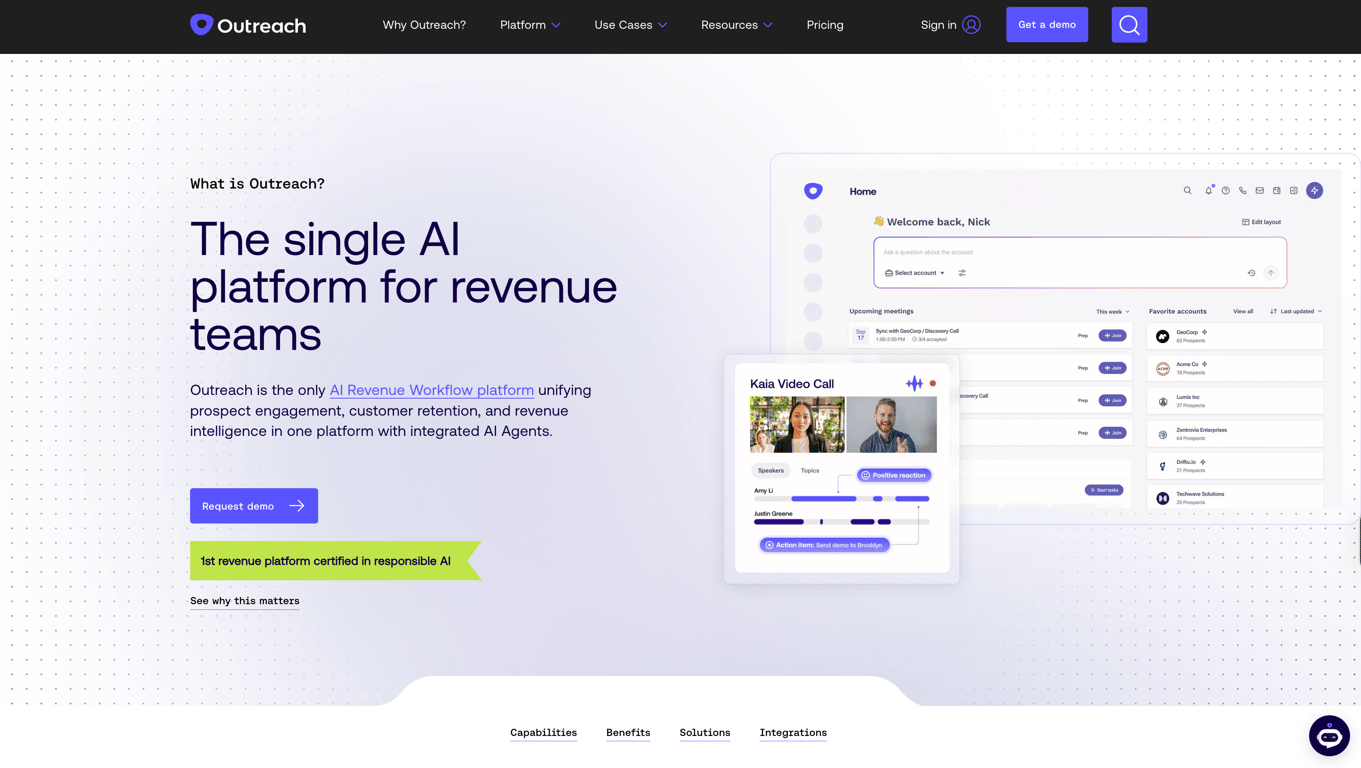
Once deals move past first contact, speed depends on follow-up discipline rather than volume. Missed or delayed touchpoints slow momentum, especially when engagement spans multiple channels.
At this stage, sales momentum depends on consistency. Outreach keeps engagement consistent by coordinating follow-ups once a lead becomes active, with actions scheduled rather than improvised.
That consistency comes from sequencing, where email, calls, and tasks are arranged into defined steps. For companies selling to technical audiences (developers, CTOs), this consistency is crucial—oversaturating a developer with sales emails can backfire. Outreach helps modulate this frequency.
Outreach uses AI to guide execution across these opportunities through:
Multi-channel sequence coordination: Email, call, and task steps follow a set order, keeping follow-ups on track without manual tracking.
AI guidance on timing and messaging: Engagement data guides when to reach out and how to adjust messaging as buyers respond.
Engagement-based performance visibility: Activity patterns make it clear how consistent follow-up affects pipeline movement.
Verdict: Choose Outreach when pipeline velocity relies on consistent follow-up and coordinated engagement at scale.
6. Drift: AI Conversational Sales Automation
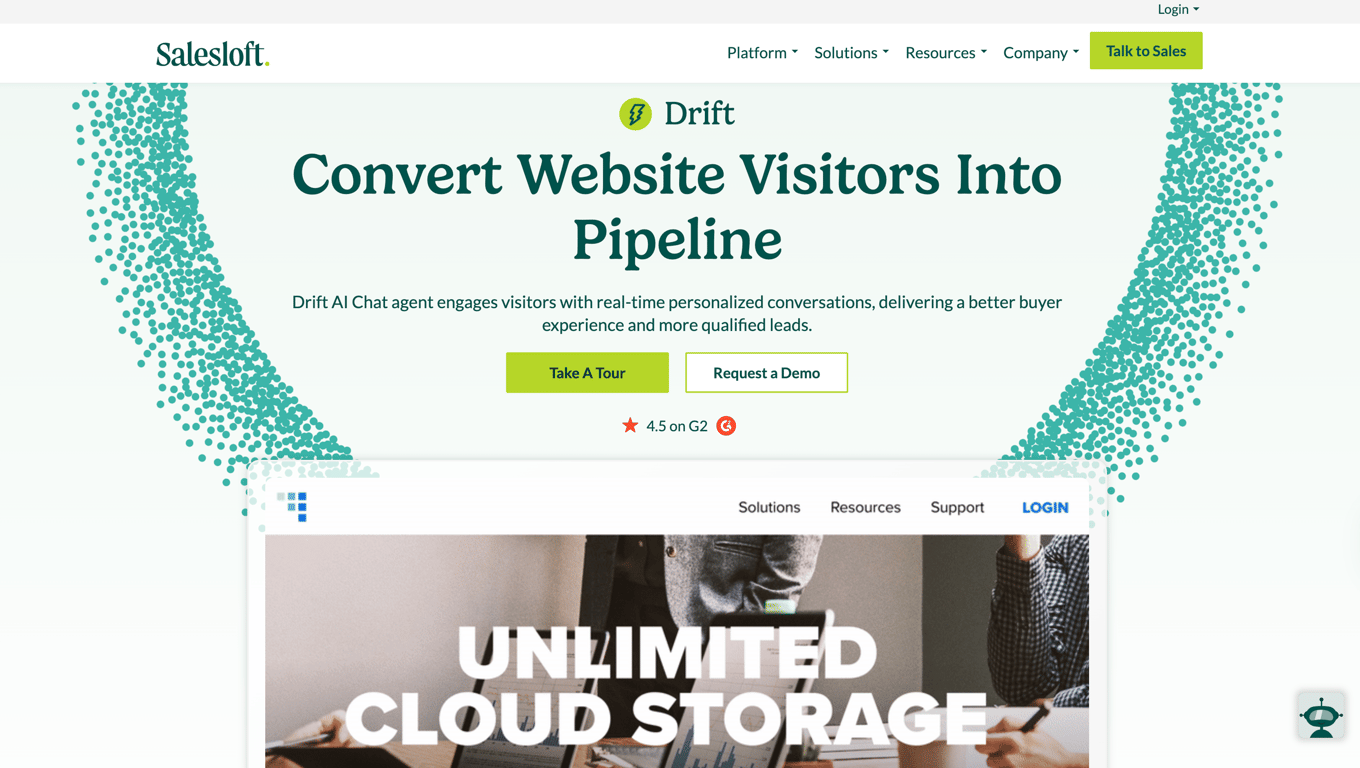
Inbound interest fades quickly when buyers are left waiting. Drift captures that intent at the moment it appears by converting website visits into real-time sales conversations.
However, that inbound traffic doesn't appear by magic. It is shaped upstream by content and SEO. This is where developers and marketing teams collaborate using platforms like Wisp to deploy high-performance blogs that attract qualified visitors. Once Wisp serves the content and the visitor lands on the page, Drift takes over the conversation.
Drift uses AI-powered chat to engage visitors as they browse. It qualifies intent through structured questions and routes high-value prospects to the right path without requiring a sales rep to be present.
To support this flow from first interaction to next step, Drift structures conversational selling around four engagement signals:
Real-time visitor engagement and qualification: AI chat engages visitors immediately and filters them by intent, role, and buying readiness.
Instant meeting booking inside chat: Qualified visitors can schedule demos or sales calls directly within the conversation.
Intent-based routing and alerts: High-value conversations trigger timely notifications or handoffs so the right owner engages at the right moment.
Context-aware conversational flows: Messaging adapts based on page context (e.g., a visitor reading a technical API documentation page vs. a pricing page) to keep interactions relevant.
Verdict: Drift is best suited for teams where inbound traffic—driven by a strong content engine—is a primary growth channel and speed to conversation matters.
7. Pipedrive: AI-Powered Pipeline Management
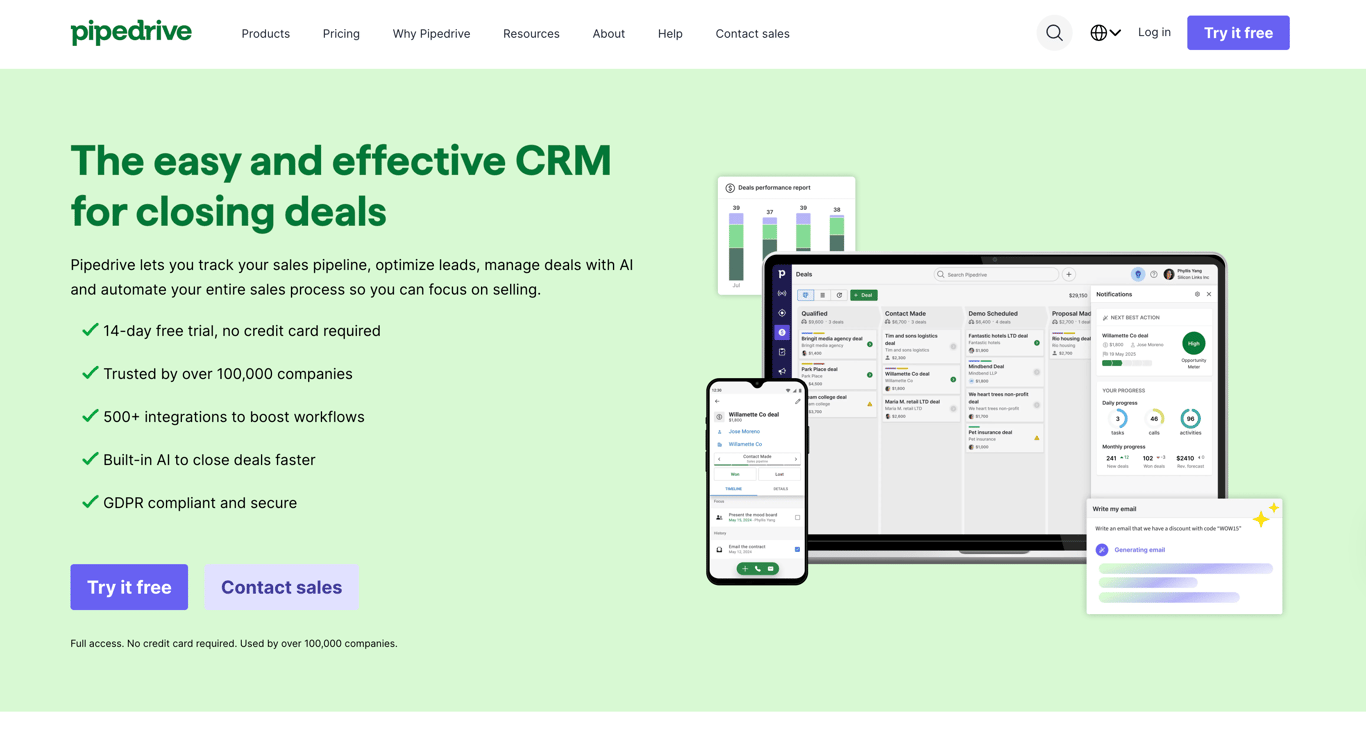
Pipedrive is built for teams that manage deals visually and need to keep pipeline movement consistent as volume grows. It enforces action at every stage, so deals progress because actions are required, not assumed.
That enforcement shows up in simple requirements: each deal must have a defined stage, an owner, and a scheduled next activity. When that activity is missing, the deal immediately stands out, making stalled work visible.
For smaller technical teams or agencies who are selling development services, Pipedrive is often the CRM of choice due to its visual simplicity and ease of setup compared to enterprise-heavy tools.
This approach is supported through four practical controls built into the pipeline:
Deal-level next action visibility: Teams can see which opportunities lack a scheduled activity and require follow-up.
Activity automation tied to stages: Tasks and reminders are triggered as deals move, keeping work aligned with pipeline progress.
Integrated communication tracking: Emails and notes stay attached to deals so context is not lost as opportunities advance.
Pipeline health overview: Stalled stages and uneven deal distribution are immediately visible, making corrective action easier.
Verdict: Pipedrive works well for teams that need clear, visual control over deal movement and follow-through, particularly popular among nimble, tech-focused SMBs.
How to Choose the Right AI Sales Automation Tool
Choosing an AI sales automation tool comes down to where bottlenecks exist in your sales workflow and how your technical stack supports them.
1. Data Ownership vs. Feature Depth Start with data ownership. Tools that operate inside a closed system are easier to adopt. However, tools that expose sales data beyond the platform (like Windsor.ai) enable deeper analysis. Consider your developer resources: do you have a team capable of managing APIs and data warehouses, or do you need an out-of-the-box solution?
2. The Content-Sales Loop Examine how content, inbound signals, and outreach connect. Content shapes intent. If your developers are using Wisp to build a fast, SEO-optimized blog, you need a sales tool (like Drift or HubSpot) that can effectively capture the traffic that content generates.
3. AI Execution vs. AI Insight Separate execution from insight. Some tools automate actions like outreach, follow-ups, or routing. Others explain why deals move or stall. Automating activity without understanding behavior increases volume, not clarity.
4. Team Maturity Smaller teams benefit from tools that reduce manual work and coordination (Pipedrive). As volume grows, fragmented data and limited visibility become the constraint, requiring more robust integration layers.
That is the decision surface.
Building the Foundation of Automated Sales
AI sales automation is powerful, but it is ultimately a force multiplier. It multiplies the signals you already have. If your pipeline is empty, AI has nothing to automate, prioritize, or analyze.
Your sales stack needs high-quality inbound traffic to feed tools like Drift. Your SDRs need technical case studies and whitepapers to power sequences in Apollo and Outreach. Your revenue operations team needs accurate attribution data to make sense of it all in Windsor.ai.
With these tools, you can build the foundation of automated sales.