 Email marketing has been declared "dead" more times than most marketers can count.
Social media platforms rise and fall, algorithms change overnight, and new channels constantly compete for attention. Yet email continues to quietly deliver consistent results, especially for businesses that want ownership of their audience rather than renting it from a platform.
Here at Wisp, we tend to look at email tools through a practical lens: can they work well for marketers while still fitting cleanly into a modern web stack?
After all, the real challenge today isn't whether email still works, but which tool makes it work without overwhelming you with costs, complexity, or steep learning curves.
With inboxes more crowded than ever, marketers need email marketing services that make it easy to send relevant, responsive, and personalized messages while maintaining strong deliverability. Beginners want clarity and guidance, while growing teams need automation, segmentation, and scalability. That's why choosing the right platform matters more than ever.
What Really Matters in an Email Marketing Service
If you ship websites, SaaS products, or content-driven apps, you’ll usually care about two worlds at once: campaign tools for growth and reliable sending for product emails. So, before diving into specific platforms, let's establish what actually matters in a modern email marketing tool:
Intuitive Interface & Editor: Your email tool should make creating beautiful, responsive emails easy, not a chore. Many marketers get frustrated with platforms that feel "clunky and overpriced" or require you to be "ten clicks deep in menus" just to accomplish simple tasks.
Powerful & Accessible Automation: The tools that really stand out are those that let you automate based on subscriber behavior rather than just sending blasts. This is where you'll see the biggest conversion lifts – through welcome sequences, abandoned cart reminders, and personalized follow-ups.
Robust Segmentation: The ability to target specific subscriber segments based on behavior, demographics, or engagement levels is non-negotiable for cutting through inbox clutter.
A Genuinely Usable Free Plan: Many platforms offer "free" plans that are so restricted they're practically useless. The best services provide meaningful free tiers that let you actually test the platform before committing.
High Deliverability: Even the most beautiful email is worthless if it lands in spam. Look for tools that prioritize deliverability through proper authentication, list hygiene, and compliance features, plus support for authentication like SPF, DKIM, and DMARC.
Responsive Support: When you hit a roadblock, responsive customer service and docs that don’t make developers guess can make all the difference between a minor hiccup and a major campaign delay.
Best Email Marketing Services for Modern Marketers in 2026
With these criteria in mind, let's review five email marketing services that stand out for different reasons.
1. SendPulse
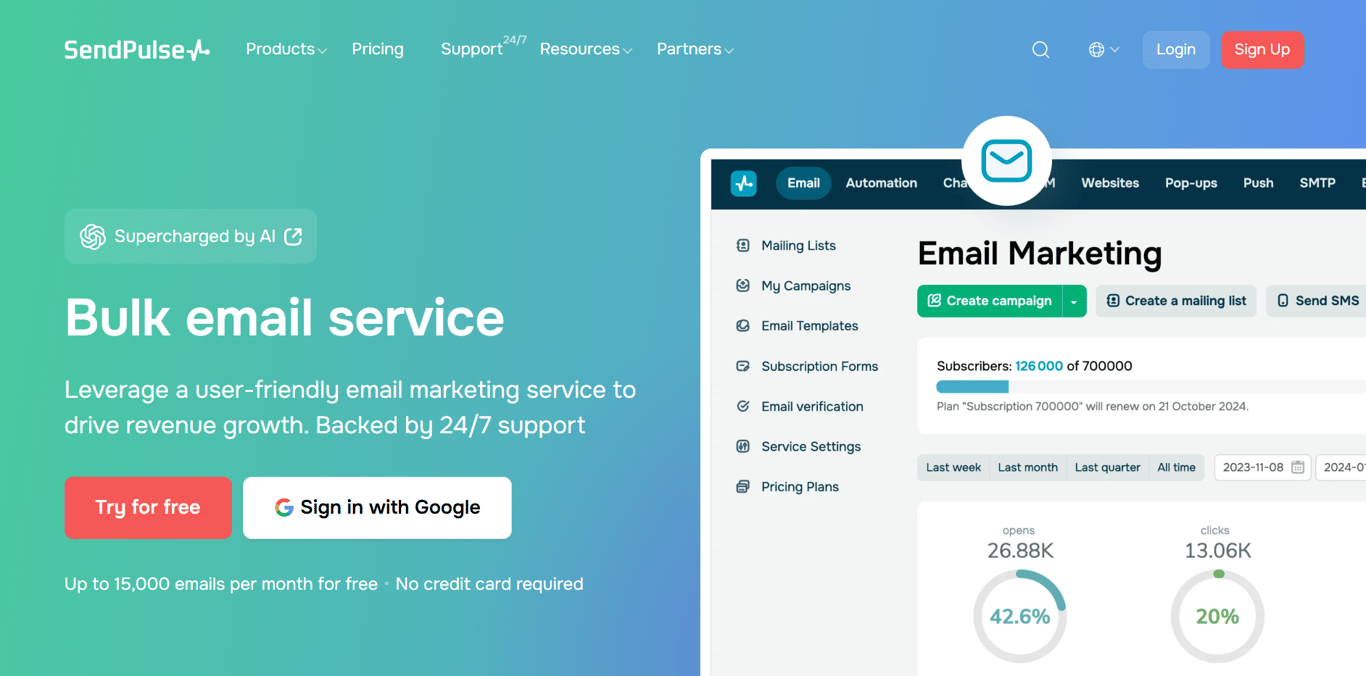 SendPulse is designed for marketers who want to start strong without feeling boxed in by early limitations. From the moment you sign up, it feels welcoming, with a clean interface and clear guidance that doesn't assume prior experience.
The platform positions itself as more than just an email tool – it's an all-in-one marketing platform for combining email and WhatsApp marketing features, particularly if you value consolidation and cost-effectiveness.
Generous Free Plan and Ease of UseWhat stands out immediately is how much you can do before ever paying for a plan. For new marketers or growing businesses, that sense of freedom can make all the difference.
Ease of use is a core strength. The drag-and-drop email builder is intuitive, responsive, and forgiving, making it simple to create emails that look good on both desktop and mobile. Ready-made templates cover common marketing needs like newsletters, promotions, and announcements, which is especially helpful for those who don't have design resources.
Automation and PersonalizationPersonalization tools are easy to access, allowing you to tailor content based on subscriber data without advanced setup.
Automation and segmentation are where SendPulse quietly delivers strong value. Even at lower pricing tiers, marketers can build automated workflows, segment audiences based on behavior, and send timely messages that feel relevant rather than generic.
Deliverability and SupportDeliverability tools, list management features, and compliance support help ensure messages reach inboxes reliably.
Add in multilingual support, responsive customer service, and learning resources that actually explain concepts clearly, and SendPulse becomes a well-rounded choice that supports both learning and growth.
Pricing: SendPulse offers a genuinely usable free plan with up to 500 subscribers and 15,000 emails per month, along with 140+ editable email templates and a drag-and-drop email builder. Paid plans start from $8/month for 500 subscribers, unlocking unlimited emails, subscriber segmentation, A/B testing, and more advanced automation features.
2. Constant Contact
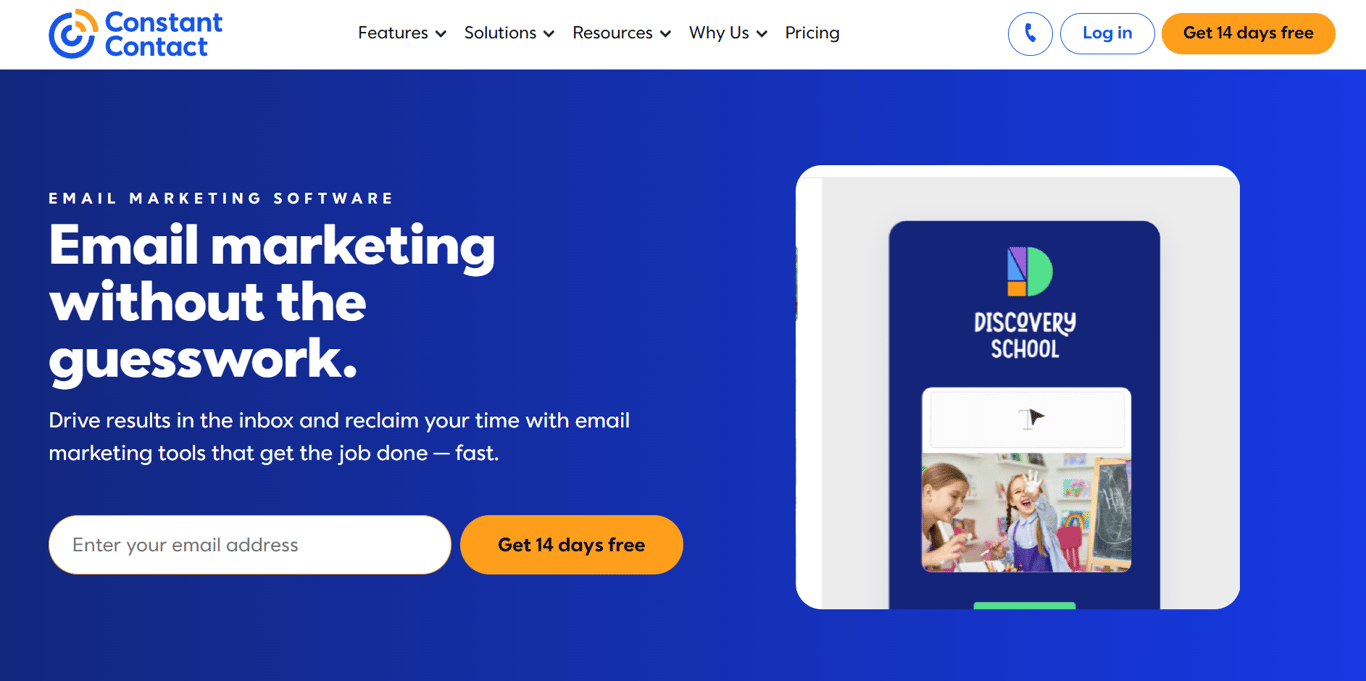 Constant Contact has long been known as a reliable email marketing service, particularly for small businesses and organizations that value structure.
From the first login, the platform feels guided and orderly, with clear steps that walk users through campaign creation. It's designed to reduce uncertainty, making it appealing for marketers who prefer direction over experimentation.
Structured Interface and Email BuilderThe interface focuses on simplicity rather than flexibility. Templates are polished and professional, helping users create emails that look credible without much customization.
The drag-and-drop builder works smoothly, though it may feel slightly restrictive for marketers who want more creative freedom. Still, for newsletters and announcements, it delivers consistent results with minimal effort.
Straightforward Automation and SegmentationPersonalization and segmentation tools are present but straightforward. You can target subscribers based on basic criteria, which works well for smaller lists or simpler campaigns. Automation features support common workflows like welcome emails and follow-ups.
Though advanced automation is limited compared to more modern platforms. This makes Constant Contact better suited for marketers with predictable communication needs rather than complex customer journeys.
Customer Support and LearningSupport and learning resources are a strong point. Constant Contact offers accessible customer support and clear educational materials, which can be reassuring for new users.
For marketers who value stability and guided workflows over advanced customization, Constant Contact remains a dependable option.
Pricing: Constant Contact provides a 30-day free trial instead of a free plan. Paid plans start at approximately $12/month for 500 contacts, including drag-and-drop email templates and AI content recommendations.
3. ActiveCampaign
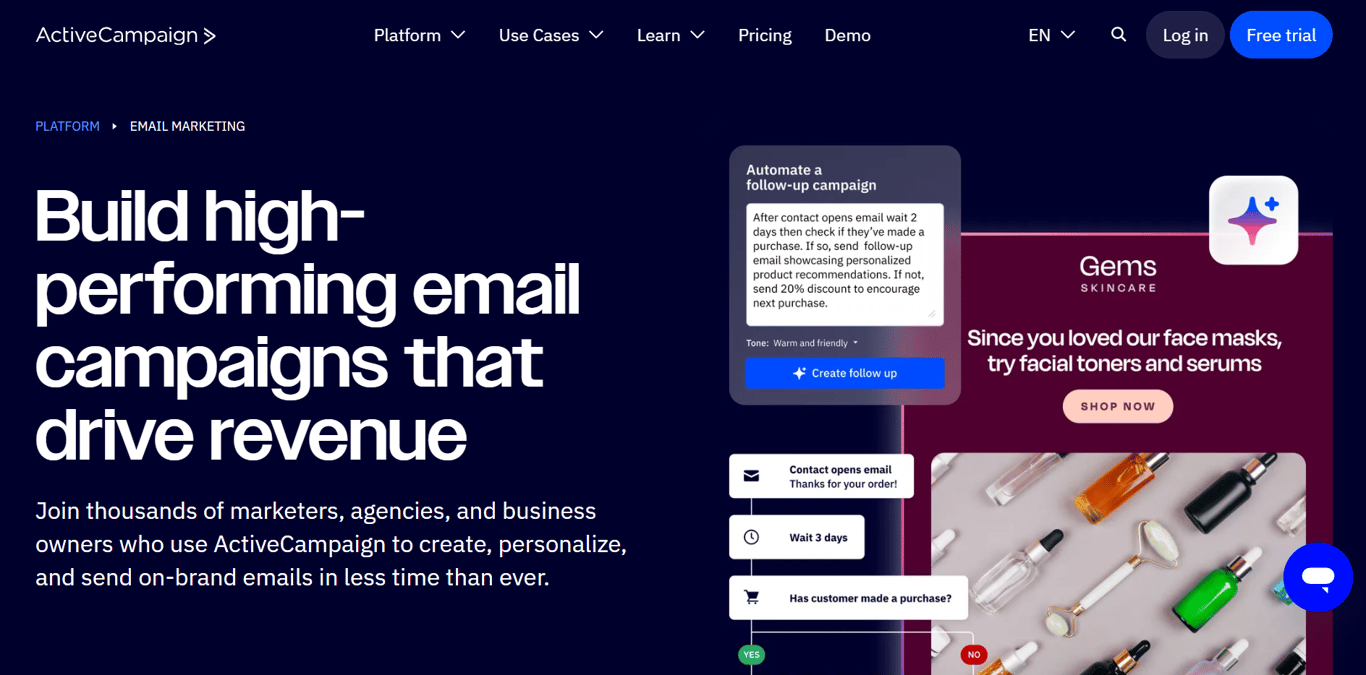 ActiveCampaign is built for marketers who are ready to move beyond basic email campaigns and explore deeper automation. The platform positions itself as a powerful marketing engine rather than a simple email sender.
From the start, it's clear that ActiveCampaign expects users to invest time in learning how things work.
Advanced Automation EngineAutomation is the centerpiece of ActiveCampaign's offering. Marketers can create highly detailed workflows based on subscriber behavior, preferences, and engagement patterns. This makes it possible to deliver messages that feel timely and relevant, but it also adds complexity.
For beginners, the learning curve can feel steep, especially when compared to more beginner-friendly platforms.
Powerful Supporting FeaturesThe email builder and templates are functional and modern, though they may feel secondary to the automation tools. Personalization and segmentation are powerful, allowing marketers to slice audiences in detailed ways.
Reporting and analytics provide insights into performance, helping teams refine their strategies over time. However, these features often feel geared toward experienced users rather than those just starting out.
Integrated CRM and Extensive IntegrationsActiveCampaign stands out with its integrated CRM features that help bridge the gap between marketing and sales, making it particularly valuable for B2B companies or businesses with longer sales cycles. With over 1,000 integrations, it can connect to virtually any tool in your marketing stack.
Pricing: ActiveCampaign offers a 14-day free trial. Paid plans start from $15/month for 1,000 contacts, 10,000 email sends, and 5 actions per automation.
4. GetResponse
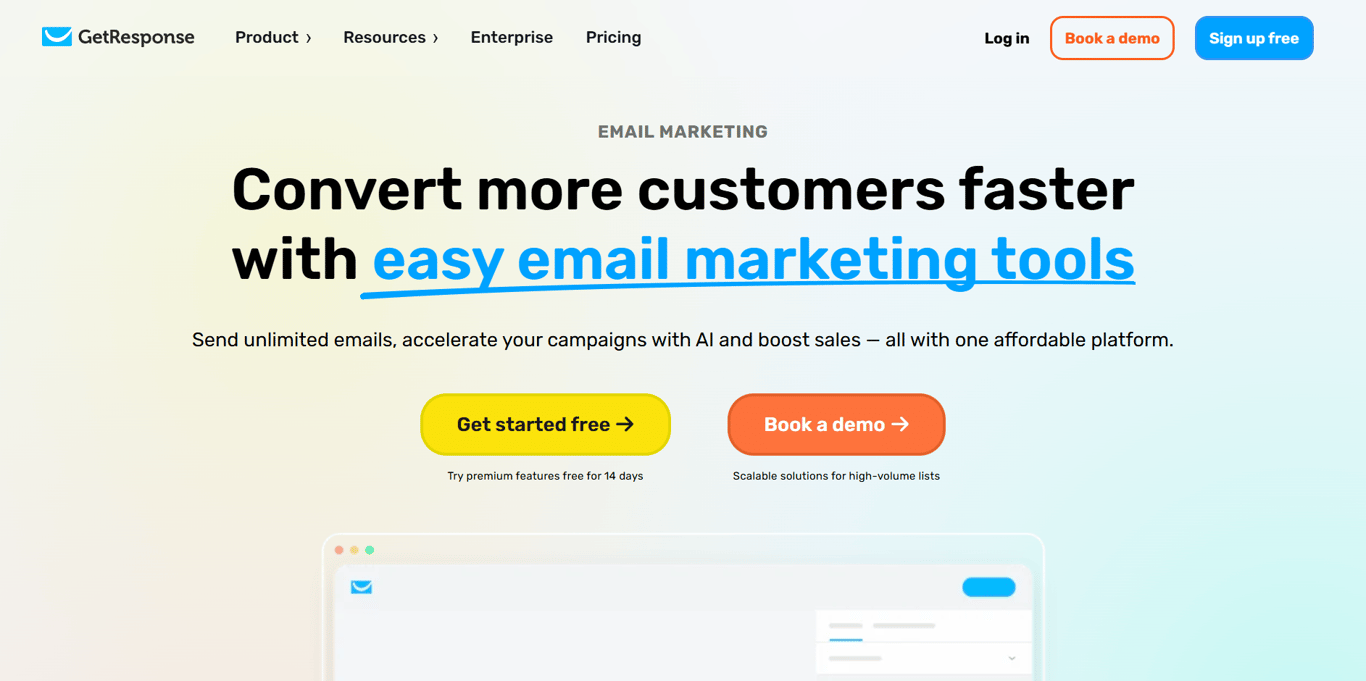 GetResponse presents itself as an all-in-one marketing solution with a strong focus on campaign execution. From email creation to automation and analytics, the platform aims to cover every stage of the marketing process.
For campaign-focused teams, GetResponse offers a lot to work with.
Polished Email Editor and PersonalizationThe email editor is polished and easy to use, with a wide selection of templates designed for different industries and campaign types. Creating responsive emails feels straightforward, even for users without design experience.
Personalization tools allow marketers to adapt content based on subscriber data, helping messages feel more relevant. These features support both promotional campaigns and ongoing communication.
Robust Automation and SegmentationAutomation capabilities are robust, offering prebuilt workflows and customizable paths. Marketers can set up sequences for onboarding, promotions, and re-engagement without excessive technical setup.
Segmentation tools help organize audiences based on behavior and engagement, making targeting more precise. Deliverability tools and compliance features support reliable inbox placement.
All-in-One Marketing ToolkitWhat sets GetResponse apart is its comprehensive offering beyond email – including unlimited landing pages, a website builder, and webinar capabilities even on lower-tier plans. This makes it particularly valuable for marketers looking to consolidate their tools.
Pricing: GetResponse provides a free plan for up to 500 contacts and 2,500 emails per month. Paid plans start near $19/month for 1,000 contacts, unlimited monthly email sends, AI-powered content generators, welcome email series, and custom automation workflows.
5. Drip
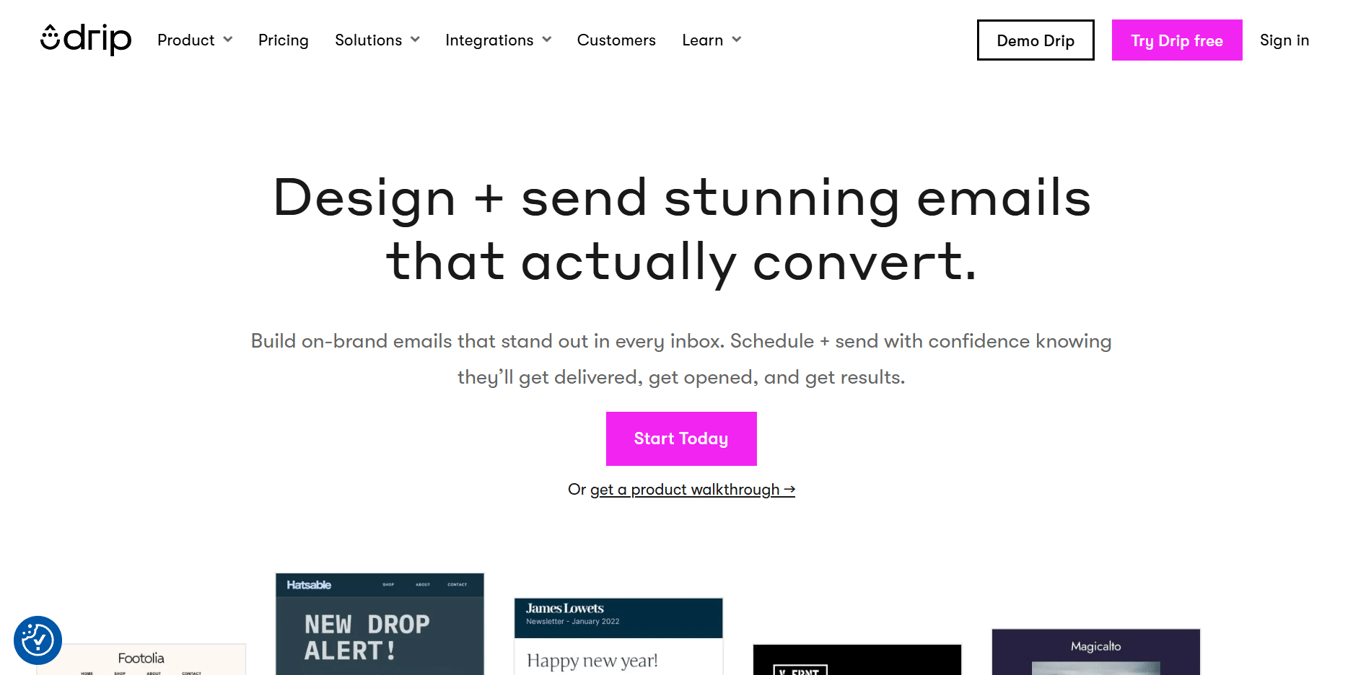 Drip is built with a clear audience in mind: marketers running e-commerce businesses. The platform focuses on behavior-based messaging that aligns closely with customer actions. From browsing activity to purchases, Drip is designed to respond in real time.
The interface emphasizes clarity and control. Email creation is clean and efficient, though template variety is more limited compared to broader platforms.
Personalization is where Drip truly delivers, allowing marketers to tailor messages based on detailed customer behavior. This helps create emails that feel timely and relevant without feeling intrusive.
Revenue-Focused Automation and ReportingAutomation tools are central to the experience. Marketers can build workflows that respond to specific actions, supporting abandoned cart reminders, follow-ups, and retention campaigns.
Segmentation is deep and flexible, making it easier to target customers at different stages of the buying journey. Reporting tools focus on revenue-related metrics, aligning email performance with business outcomes.
Deep E-commerce IntegrationDrip's deep integration with e-commerce platforms like Shopify makes it particularly valuable for online stores that want to move beyond basic email blasts to sophisticated, revenue-driving automation.
However, this specialized focus comes at a higher price point than more general-purpose platforms.
Pricing: Drip offers a 14-day free trial. Paid tiers start from $39/month for 2,500 contacts and unlimited email sends. This makes Drip best suited for marketers ready to invest in sophistication.
At-a-Glance Comparison
Platform | Best For | Free Plan | Starting Price | Standout Feature |
|---|---|---|---|---|
SendPulse | All-in-one for SMBs | 500 contacts, 15,000 emails/mo | $8/month | Multi-channel (Email, WhatsApp, SMS) |
Constant Contact | Events & Nonprofits | 30-day trial | $12/month | Guided user experience |
ActiveCampaign | Advanced Automation | 14-day trial | $15/month | Integrated CRM & powerful workflows |
GetResponse | Webinars & Funnels | 500 contacts, 2,500 emails/mo | $19/month | All-in-one toolkit with landing pages |
Drip | E-commerce | 14-day trial | $39/month | Revenue-focused e-commerce automation |
A Developer's Perspective: APIs and Transactional Emails
 If you’re building on a headless CMS or shipping product features weekly, your email platform can’t be a silo. While marketers focus on drag-and-drop editors and campaign analytics, developers often interact with these platforms on a deeper level.
For web development, two key features matter most: transactional email support and a robust API.
Transactional Emails: These are the automated, one-to-one emails triggered by user actions in your application, like password resets, order confirmations, and welcome messages.
While you could build your own email server, it's far more reliable to use a dedicated service. Platforms like SendPulse, for instance, offer a separate SMTP service designed for high-volume transactional sending, ensuring your critical app emails don't get lost in spam folders.
API Access: A powerful API (Application Programming Interface) allows you to integrate the email platform directly into your applications. Developers can use APIs to:
Automatically add new users from a web app to a mailing list.
Trigger marketing emails based on in-app behavior.
Sync customer data between your CRM and the email service.
Build custom reporting dashboards.
When choosing a service from a developer's standpoint, look for clear API documentation, high rate limits, and SDKs (Software Development Kits) for your preferred programming language.
Good SDKs, clear docs, and predictable rate limits save hours during integration. Webhooks also matter because they let your app react to events like bounces, unsubscribes, and clicks.
Platforms with flexible APIs give you the power to build sophisticated, automated communication workflows that go far beyond standard marketing campaigns.
Final Thoughts
All the platforms reviewed have their strengths. Constant Contact offers structure and guidance for traditional campaigns, ActiveCampaign excels in deep automation, GetResponse provides a broad campaign toolkit, and Drip focuses tightly on e-commerce performance.
Each of these platforms can support successful email marketing when matched with the right use case. However, their reliance on free trials or higher pricing means marketers often have to commit before fully understanding the platform's fit.
With the SendPulse platform, for example, you get a free plan allows marketers to learn, test, and build confidence before investing, which is especially important in a time when email marketing feels less approachable to newcomers. You can also transform conversations into conversions by running WhatsApp marketing campaigns with WhatsApp Chatbots all in a single platform.
The balance between ease of use and meaningful features makes it suitable for both beginners and growing teams. Automation, personalization, and responsive design are accessible rather than hidden behind complexity.
Ultimately, the best platform is one you'll actually use consistently. So, take advantage of the free plans and trials to see what fits your workflow. And to ensure your email content is always compelling and conversion-focused, consider using AI-powered tools to craft high-converting subject lines and email copy.
This combination of the right email platform and content creation tools can turn your email marketing into a powerful revenue generator for your business!
Frequently Asked Questions
What is the most important feature in an email marketing service?
The most important feature depends on your specific needs, but key elements for most users include an intuitive interface, powerful automation, robust segmentation, and high deliverability. For developers, it’s reliable sending plus solid integration: strong deliverability (SPF/DKIM/DMARC), a clean API/webhooks, and automation you can trigger from app events.
Which email marketing service is best for beginners?
If you’re shipping fast, pick a tool with a usable free tier, clear docs, and easy setup. SendPulse is a good starter; Constant Contact works if you want a more guided UI.
Why is a generous free plan so important?
A generous free plan is important because it allows you to thoroughly test a platform's core features and determine if it fits your workflow before you commit to a paid subscription. Many services offer free trials or heavily restricted free plans that don't give a true sense of the tool.
How do automation and segmentation improve email marketing?
Automation and segmentation work together to send the right message to the right person at the right time, making your marketing more relevant and effective. In other words, they let your app send the right message on the right trigger. Segment by events and attributes, then automate flows like onboarding, re-engagement, or cart recovery based on user behavior.
What is email deliverability and why does it matter?
Email deliverability is the measure of how successfully your emails reach your subscribers' inboxes. It matters because even the best-crafted email is useless if it ends up in the spam folder. So, prioritize providers with authentication support, bounce handling, and suppression lists.
This article was edited by the team at wisp.blog, where we write about modern web building, content systems, and the tools that help teams grow.”