Summary
A blog is essential for B2B SaaS growth, as traditional methods like cold calling yield a mere 2% success rate while content-driven SEO can account for nearly 60% of revenue.
The most effective content strategy is to answer real customer questions from support tickets and sales calls, which naturally targets high-intent keywords and builds topical authority.
Launch a high-performance blog in hours—not weeks—by using a purpose-built headless CMS and a starter kit, allowing you to focus on content creation, not code.
You've set up your SaaS product, but now you're facing the content conundrum. Your inbox is filled with advice telling you that "content is king" and "you need a blog to drive organic traffic" — yet the thought of creating a blog feels like signing up for an endless content treadmill.
As one SaaS founder put it: "I avoided blogging for a long time because it felt like a time sink." And they're not alone. Many founders feel pressured to "create polished, content calendar fluff instead of meaningful content" while struggling with the harsh reality that "it's hard to get customers without ads."
But here's the truth: A blog isn't optional for B2B SaaS companies. As another successful founder bluntly stated, "No blog means no topical authority means nobody able to find you means no revenue." With traditional methods like cold calling yielding a mere 2% success rate, educational content has become essential for SaaS growth.
The good news? You don't need to overcomplicate this. This guide provides a minimal, 5-step framework to launch a fast, lead-generating blog—without the engineering overhead or content strategy paralysis that stops most founders before they start.
Let's build a blog that actually moves the needle for your SaaS business.
Step 1: Choose a Tech Stack Built for Speed & Simplicity
Building a blog from scratch is a distraction from your core business. The goal is to publish valuable content, not maintain blog infrastructure. Many founders feel they "lack resources or technical expertise to create custom blogging solutions."
For modern SaaS companies using Next.js or React, a headless CMS approach provides the fastest path to a high-performance blog. It separates your content management from your frontend codebase, giving you both speed and flexibility.
Here are your best options (with a focus on simplicity and fast setup):
1. Wisp.blog (Recommended for Next.js)
Wisp.blog is purpose-built for the exact "blog on Next.js" workflow, eliminating the complexity of general-purpose CMSs. It's particularly well-suited for B2B SaaS companies because:
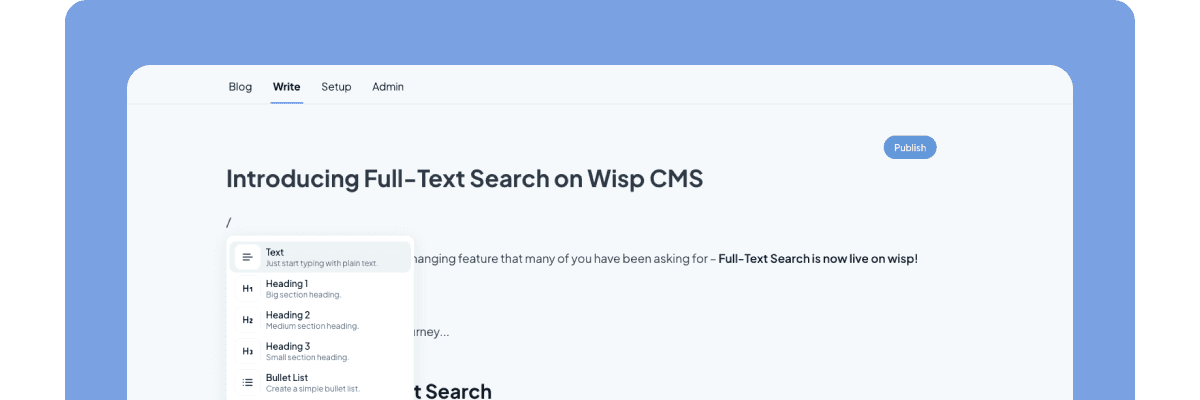
Non-Developer Publishing: The Medium/Notion-style editor lets marketing teams and founders publish without writing Markdown or creating developer tickets.
Quick Integration: The JavaScript SDK and Next.js Blog Starter Kit can get you live in hours, not days.
Performance-First: Content and images are delivered via a global CDN, ensuring your blog loads quickly (crucial for both user experience and SEO).
Generous Free Tier: There's a "Free Forever" plan with attribution, perfect for early-stage startups.
2. Payload CMS
Payload CMS is popular among developers for its deep integration with Next.js (v3.0) and flexibility. It's a solid choice if your team has more development resources and wants more control over the CMS structure.
3. Sanity
Sanity is praised for its excellent documentation, powerful GROQ query language, and built-in fetching support for Next.js App Router. This is a good option for teams that plan to build complex content structures beyond just blogging.
4. Other options
Strapi and Directus are also popular choices in the headless CMS space, though they're more general-purpose and may require more setup time for a blog-specific implementation.
Actionable Takeaway: For a SaaS blog on Next.js, prioritize a tool that's purpose-built for the job. A specialized headless CMS like Wisp removes friction and lets your team focus on content, not code.
Step 2: Build Your Content Strategy from Real User Questions
The biggest blocker to starting a blog isn't technology—it's figuring out what to write. Many founders "struggle to find relevant topics that resonate with their audience" and feel paralyzed by the blank page.
Enter the "Answer Every Question" framework. As one successful founder explained: "If someone asked it once, it became a post." This simple approach positions you as an expert and directly addresses user needs. Another founder added: "Imagine replying to almost every question your potential client has through unique blog posts. That would position you above 90% of your competitors."
Here's how to implement this strategy:
Step-by-Step Action Plan
Create a Content Backlog: Start a simple spreadsheet or Notion doc. This is your single source of truth for blog ideas.
Mine for Gold: Systematically collect questions from:
Support emails and tickets
Sales and demo calls (record these if possible)
Onboarding feedback
Niche communities where your customers hang out (specific subreddits, Slack groups, Discord servers)
Focus on One Takeaway Per Post: Avoid massive guides trying to cover everything. As one user lamented, "Most SaaS blogs try to cram 10 ideas into one article and nobody remembers any of it." Instead, make each post focused on solving one specific problem.
The SEO Benefit: This strategy naturally targets high-intent, long-tail keywords and helps you build topic clusters over time, which is critical for establishing topical authority with search engines.
Step 3: Deploy Your Blog Infrastructure in Under Two Hours
A custom blog build can take weeks or months. Early-stage SaaS companies need to move faster. The solution? Use a starter kit that gives you a production-ready foundation you can customize later.
Let's walk through setting up a blog using the Wisp Next.js Blog Starter Kit as an example:
This kit is designed to get a high-performance blog live in about two hours. You can see a live demo here or check out the GitHub Repository.
Technologies Used
The starter kit comes with a modern, fast stack:
Next.js 14 (App Router)
React Server Components (RSC)
Tailwind CSS & Shadcn UI for clean, customizable design
TypeScript for type safety
The 5-Minute Setup Process
Clone the repository:
git clone https://github.com/Wisp-CMS/nextjs-blog-cms-wisp.git
Sign up for a free Wisp account at wisp.blog and create a blog to get your
BLOG_ID.Copy the
.env.examplefile to.env.localand add yourBLOG_ID.Install dependencies and run the development server:
npm install
npm run dev
Your blog is now running locally, ready for deployment to Vercel, Netlify, or your preferred host.
Key Takeaway: Using a starter kit eliminates weeks of development work and ensures your blog is built on best practices for performance and SEO from day one.
Step 4: Execute a Simple and Consistent Publishing Cadence
The fear of the "content treadmill" causes many founders to never start blogging. The solution is to focus on consistency over perfection.
One founder who saw real results recommends a simple, achievable goal: "Publish 2-3 times a week for at least 30 days." The goal isn't to be perfect; it's to build a habit and create a library of assets. There are "no promotion tricks, just posting and sharing naturally when relevant."
Set Realistic Expectations
It's important to understand that blogging is a long-term strategy. As one SaaS owner explained: "It's a major source of traffic for us, but it took us over a year to get where we are today after consistently pushing quality content almost every week."
This is where a simple publishing workflow becomes critical. A tool like Wisp, with its non-dev editor, removes the engineering bottleneck and lets anyone on the team contribute content, increasing your publishing velocity.
Step 5: Integrate Soft CTAs for B2B SaaS Lead Generation
How do you turn readers into leads without being obnoxious? Intrusive pop-ups and aggressive banners don't work for savvy B2B buyers.
The solution is what we call the "Soft Call-to-Action (CTA)". One founder who saw real results recommends this exact template: "Include a subtle line at the end of posts, like: 'If this was helpful, this is what I'm building.'"
This method works because it respects the reader, builds trust, and feels like a natural extension of the helpful content they just consumed. The result is organic signups from genuinely interested prospects.
Other High-Value Lead Gen Tactics for SaaS Blogs
Link to a Free Tool: If your post is about a problem your tool solves, link to it. Moz does this effectively by linking to their keyword research tool at the end of SEO articles.
Mention Your Freemium Plan: If you have a free tier, mention how it helps solve the problem discussed in the post. Calendly has built a successful business on this freemium strategy.
Embed Forms for Gated Content (Sparingly): For high-value pillar content, consider offering a downloadable checklist or template in exchange for an email.
Conclusion: From Content Treadmill to Growth Engine
Building a blog doesn't have to be the resource-draining, content-calendar-driven chore many founders fear. By shifting your perspective and following this simple framework, you can transform it from a dreaded task into your most powerful, compounding asset for customer acquisition.
The path is clear: focus on answering real customer questions, use a purpose-built tech stack to eliminate engineering friction, and maintain a simple, consistent publishing rhythm. Each article becomes a salesperson working for you 24/7, building trust and attracting high-intent customers for years to come. The payoff isn't just traffic; it's sustainable revenue driven by genuine authority.
Ready to stop procrastinating and start building? With Wisp's Next.js starter kit, you can launch a high-performance blog in a matter of hours, not weeks. Get started for free and turn your content into a customer acquisition channel that works while you sleep.
Frequently Asked Questions
Why is a blog so important for a B2B SaaS company?
A blog is important for B2B SaaS because it builds authority, drives organic traffic from search engines, and generates leads by answering customer questions. It's a key growth asset.
What is the fastest way to set up a blog for a Next.js application?
The fastest way to set up a Next.js blog is by using a headless CMS with a starter kit. This lets you launch a high-performance, SEO-ready blog in hours, not weeks.
How do I come up with blog post ideas that attract customers?
To come up with blog ideas that attract customers, answer their real questions. Mine support tickets and sales calls for pain points to ensure your content is always relevant.
How often should I publish new blog posts?
To publish new blog posts, aim for consistency. Start with 2-3 posts per week for the first month to build a content library and momentum with search engines, then adjust as needed.
How long does it take for a SaaS blog to generate leads?
A SaaS blog can take 6-12 months of consistent posting to generate leads. It's a long-term strategy where traffic and authority compound over time. Patience is key.
What is the best way to convert blog readers into SaaS users?
The best way to convert readers is with soft CTAs. At the end of a post, add a subtle line mentioning your product, a free tool, or a freemium plan. This builds trust.